How Much Should a First Car Cost?
A first car should fit a monthly ownership ceiling of about 15% of take-home pay. For many buyers, that means the purchase price needs to leave room for insurance, fuel, tax, maintenance, tyres, and a repair buffer. If the monthly cap is exceeded, the car can crowd out savings very quickly. This guide shows how to turn income into a hard monthly limit, then work back to a realistic first-car price.
Set a monthly car budget first
Start with monthly take-home pay, not the sticker price. A car that looks affordable upfront can still cost too much if insurance, fuel, tax, and repairs push total ownership above the monthly limit. That is why the right first-car budget begins as a monthly ceiling, then becomes a price cap.
Why the sticker price is only part of the answer
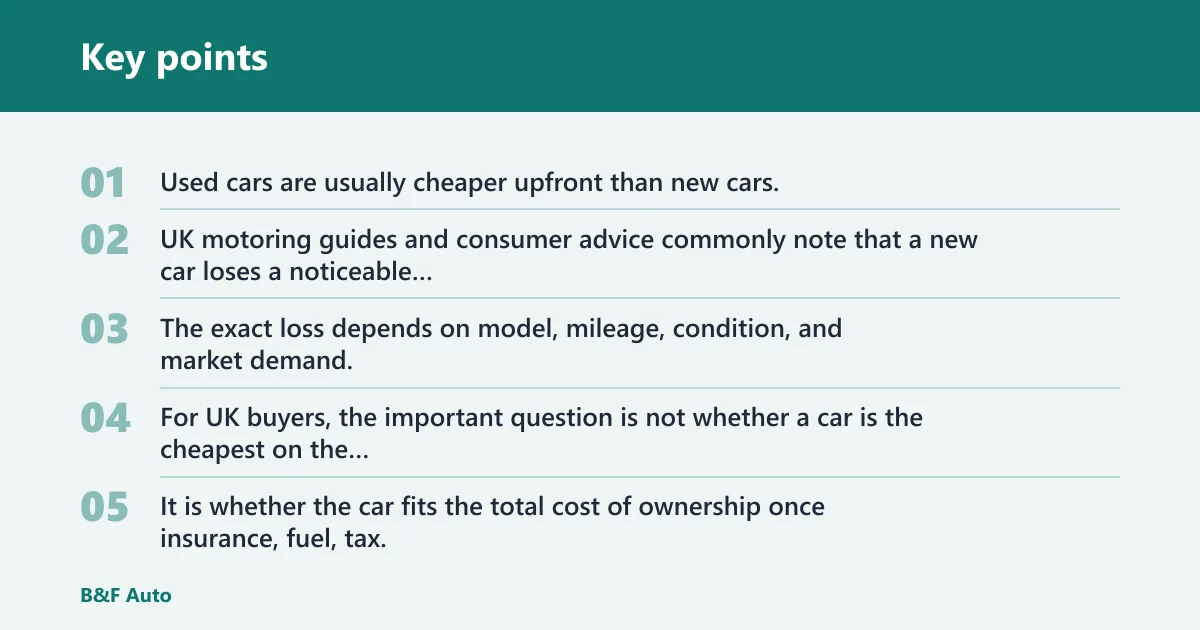
Used cars are usually cheaper upfront than new cars, but the monthly bill can be higher once insurance and maintenance are added. UK motoring guides and consumer advice commonly note that a new car loses a noticeable chunk of its value as soon as it is registered, and depreciation remains steep in the first year. The exact loss depends on model, mileage, condition, and market demand, but the key point is simple: a higher purchase price can mean a larger value drop later, even before running costs are counted.
For UK buyers, the important question is not whether a car is the cheapest on the forecourt. It is whether the car fits the total cost of ownership once insurance, fuel, tax, servicing, and a repair reserve are included.
Why monthly affordability matters more than the list price
A first car should leave room for insurance, fuel, routine service, and an emergency repair reserve. A buyer who spends too much on the car itself often has to cut the very costs that keep it on the road. That is where cheap turns into expensive.
Say monthly take-home pay is £2,000. A 15% car ceiling gives a total ownership budget of £300 a month, not just a loan payment. If insurance alone is £180, there is only £120 left for fuel, tax, maintenance, tyres, and repairs. That is why the purchase price has to be set after the running costs are known.
First-car budget worksheet
This worksheet turns take-home pay into a purchase cap. It is a text-only planning tool, not a quote, so replace the example figures with real insurance, fuel, and tax numbers before shopping.
Formula: monthly take-home pay × ownership cap = total monthly car budget.
Then subtract insurance, fuel, road tax, maintenance reserve, tyres, and an emergency buffer to find the maximum monthly payment.
For cash buyers, turn that monthly ownership figure into a purchase budget by keeping back at least one year of insurance, tax, maintenance, tyres, and repairs.
| Step | Monthly amount | Notes |
|---|---|---|
| Monthly take-home pay | £2,500 | Starting point |
| Ownership cap | 15% | General ceiling for total car costs |
| Total monthly car budget | £375 | £2,500 × 15% |
| Insurance | £150 | Quote-based estimate |
| Fuel | £76 | About 400 miles a month at 19 p per mile |
| Road tax | £15 | Monthly allowance for Vehicle Excise Duty |
| Maintenance reserve | £60 | Routine servicing and wear items |
| Tyres and consumables | £25 | Spread the cost over time |
| Emergency buffer | £25 | Early repair cushion |
| Maximum monthly payment | £24 | Total car budget minus running costs |
| Back-solved cash purchase range | About £4,000 to £7,000 | Keep savings intact and preserve a repair fund |
| Back-solved financed purchase range | About £3,000 to £8,000 | Depends on APR, term, and deposit |
For financed buyers, the safe monthly payment is what remains after insurance, fuel, tax, maintenance, tyres, and an emergency cushion. For cash buyers, the useful question is different: how much can be spent and still leave money for the first service, tyre wear, and an unexpected repair? A first car that empties savings can create a bigger problem than the car solves.
Quick affordability guide by take-home pay
The ranges below are broad planning bands, not exact quotes. They are designed to help with a first-pass budget before real insurance and tax numbers are plugged in.
| Monthly take-home pay | Safe ownership ceiling | Likely running-cost allowance | Sensible purchase-price range |
|---|---|---|---|
| £1,500 to £1,999 | £225 to £300 | £150 to £220 | About £2,500 to £5,000 |
| £2,000 to £2,999 | £300 to £450 | £180 to £280 | About £4,000 to £8,000 |
| £3,000 to £3,999 | £450 to £600 | £220 to £350 | About £6,000 to £12,000 |
How much should you budget for insurance?
Insurance can be the deal-breaker for a first car. Younger drivers often face higher premiums, and the vehicle chosen can move the quote as much as age or postcode. If the insurance quote does not fit the budget, the car does not fit the budget. UK insurers also price based on the car’s group, engine size, security, and claim history, so the same model can cost very different amounts to cover.
Why age, location, and vehicle type change quotes
Insurance cost varies by age, location, and vehicle type. A small hatchback can still be expensive to insure if it sits in a higher-risk area or has a claims history that pushes the quote up. The car matters, but the driver profile matters too. For a first car, quote comparisons are more useful than general averages.
For UK readers, the average premium is not a safe budgeting target because it can hide wide differences by age and location. For non-UK readers, use the same method with local quotes and local annual taxes rather than UK figures.
Monthly payment versus annual payment
Monthly instalments can make insurance feel easier to handle, but monthly payment plans often cost more over the year than paying upfront. If cash flow is tight, monthly payment may be necessary. If the annual premium can be paid without straining savings, that is often the cheaper route overall.
Get insurance quotes before buying the car, not after. A car that looks affordable on paper can become expensive once the insurer factors in the vehicle, engine size, storage location, and driver history.
What should you allow for tax and registration?
Legal ownership costs are not optional. In the UK, road tax is Vehicle Excise Duty, and registration-related costs can also apply when buying or changing keeper details. These bills can be annual rather than monthly, so they need a monthly allowance in the budget even when they are not paid every month.
Legal ownership costs you cannot skip
UK road tax varies by vehicle type, emissions band, and registration date. The Driver and Vehicle Licensing Agency sets the charge, and some cars qualify for lower or zero rates while others do not. Build the monthly allowance around the actual car being considered, not a generic estimate. For non-UK readers, substitute your local road tax or registration fee and follow the same budget method.
Renewal timing and local fee differences
Some owners pay road tax in one yearly block. Others spread it across the year through budgeting. Either way, renewal timing can create a cash squeeze if the bill lands near insurance or servicing. Set aside a small monthly amount so the renewal does not force a raid on the emergency fund.
How much should you set aside for repairs?
Maintenance and repairs can turn a cheap car into an expensive one. Routine servicing is predictable. Unexpected faults are not. A first-car budget should cover both, plus tyres and other wear items that are easy to forget until they need replacing.
Routine servicing and wear items
Older cars usually need a larger maintenance reserve because age, mileage, and prior care affect the odds of repairs. UK consumer advice commonly recommends planning for routine servicing, brake wear, battery replacement, and similar items rather than assuming a used car will only need fuel. A practical first-car budget should include a regular monthly maintenance pot, not just a one-off repair fund.
Tyres can also be a meaningful cost. A full set depends on size, brand, and vehicle type, so it is better to budget for them gradually rather than wait until replacement becomes urgent. Higher annual mileage usually means faster wear.
Unexpected repair reserve
A first-time owner should keep a separate repair buffer, even if the car has a good history. A used car can be affordable on the forecourt and still need work soon after purchase. The reserve is what stops a small fault from becoming a financial problem.
Picture a £3,500 car that needs a £400 repair in the first few months. If the purchase used every spare pound, that repair becomes a borrowing problem. If room was left for it, the car stays manageable.
What warranty coverage does and does not change
A manufacturer warranty can cover some unexpected expenses for the first few years or up to a mileage cap, depending on the brand and the policy. That helps with certain faults, but it does not remove fuel, tax, tyres, and insurance from the budget. Warranty coverage narrows the risk; it does not erase ownership cost.
Fuel, finance, and depreciation
Running cost matters every month. Finance charges matter over the loan term. Depreciation matters when the car is sold or traded later. Together, they can change the true price of a first car by a wide margin.
Monthly fuel or energy cost by mileage
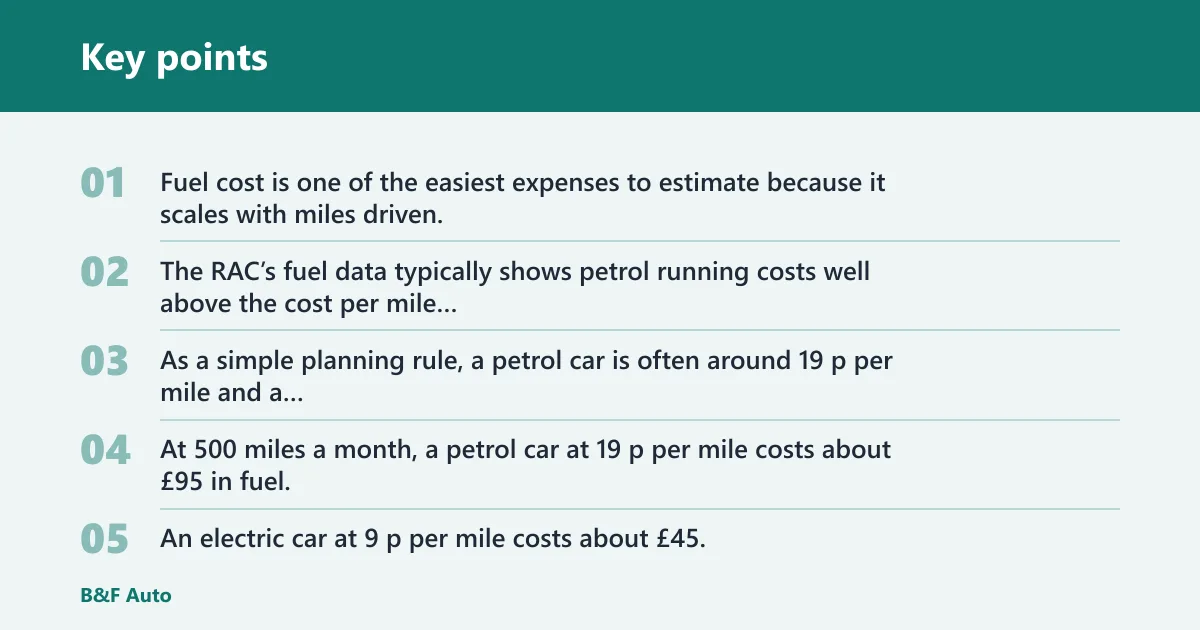
Fuel cost is one of the easiest expenses to estimate because it scales with miles driven. The RAC’s fuel data typically shows petrol running costs well above the cost per mile for many battery-electric cars charged at home, although the exact figure changes with fuel prices, efficiency, and driving style. As a simple planning rule, a petrol car is often around 19 p per mile and a battery-electric car around 9 p per mile when using current UK-style assumptions.
Monthly mileage gives a quick estimate. At 500 miles a month, a petrol car at 19 p per mile costs about £95 in fuel. An electric car at 9 p per mile costs about £45. If a home EV charger is needed, the installation cost can add around £800 to £1,500 or more depending on the property and electrical setup, so that should sit in the wider budget.
APR, loan term, and total borrowing cost
Finance can make a car look affordable on the monthly payment while raising the total cost over time. A longer term and a higher APR both increase the amount paid for the same car. That is why a low monthly payment is not the same as a good deal. The right test is whether the payment leaves enough room for insurance and running costs.
A low monthly payment is not the same as a good deal. A longer loan term reduces the monthly outlay, but it also keeps the loan open longer and raises total interest. If a first car is financed, the payment should sit comfortably below the ownership ceiling, not right on top of it.
How first-year depreciation affects resale
Depreciation is the loss in value after purchase. New cars tend to lose value quickly in the first year, while used cars often lose value more slowly. The exact number depends on the model, mileage, condition, and market demand, but the general pattern is clear: the bigger the upfront price, the more value can be lost when the car is sold.
A used car often loses value more slowly than a new one, which is one reason many first-time buyers should start there. The goal is not to buy the cheapest car possible. The goal is to buy one that keeps more of its value while staying inside the monthly limit.
How much should a first car cost uk?
In the UK, the right first-car price depends on the same monthly rule: insurance, road tax, fuel, maintenance, and repairs come first, then the purchase price. A sensible UK first-car budget often means choosing the cheapest reliable car that still leaves room for insurance and a repair reserve.
Cash buyers: setting a ceiling without wiping out savings
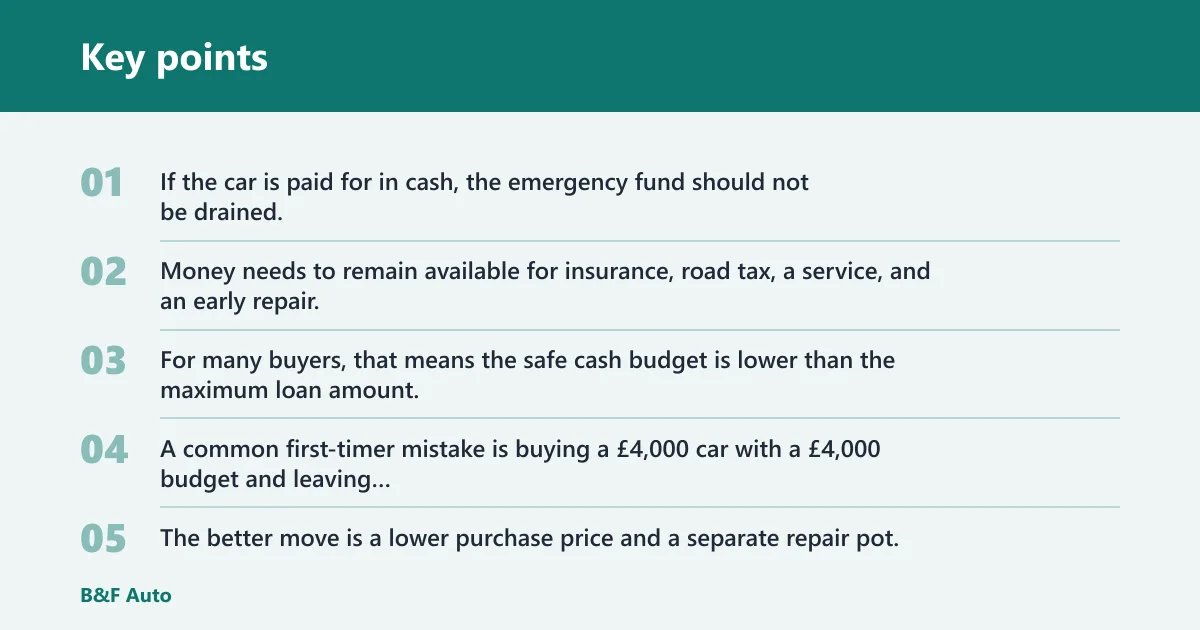
If the car is paid for in cash, the emergency fund should not be drained. Money needs to remain available for insurance, road tax, a service, and an early repair. For many buyers, that means the safe cash budget is lower than the maximum loan amount, because a cash buyer still needs spare money after the sale.
A common first-timer mistake is buying a £4,000 car with a £4,000 budget and leaving nothing for the first year’s bills. The better move is a lower purchase price and a separate repair pot.
Financed buyers: setting a monthly payment limit
If the car is financed, start with the monthly ownership ceiling and subtract running costs. Whatever remains is the payment limit. That payment should cover the loan comfortably, even if insurance rises at renewal or a tyre set arrives earlier than expected.
Use the worksheet to work backwards. If the monthly ceiling is £375 and running costs take £300, the finance limit is about £75. That payment cap helps keep the car from overtaking the rest of the budget.
When a cheaper car is the better choice
A cheaper car is the better choice when insurance is high, repairs are likely, or savings are thin. The purchase price matters less than the total monthly cost. If a small price increase cuts insurance sharply, the more expensive car may actually cost less overall.
That is why the question is not “how much should a first car cost?” in isolation. It is “how much can be spent after the insurance quote, the fuel estimate, and the repair reserve are already booked?”
Frequently asked questions
How much should a first car cost?
A first car should cost only what fits after insurance, fuel, tax, maintenance, and repairs. For many buyers, that means roughly 10% to 20% of annual gross income for the purchase price, but the monthly ownership ceiling matters more than the sale price. A cheap car is not cheap if the running costs break the budget.
How much should you budget for first-car insurance?
Budget based on a real quote, not a guess. Insurance varies by age, location, and vehicle type, so the same car can cost very different amounts for different drivers. If the quote pushes total monthly ownership above the ceiling, choose a different car or a different payment plan.
How much should you budget for maintenance and repairs?
Set aside money for both routine servicing and surprise faults. Maintenance should be treated as an ongoing monthly cost rather than an occasional extra. Tyres, brake wear, batteries, and unexpected repairs can all arrive within the first year of ownership, especially on older cars.
How much should you save for first car?
Save enough for the car, the upfront insurance payment, road tax, and a repair cushion. Cash buyers should avoid spending every pound on the purchase itself. The safer route is a lower car price with money left over for the first service, tyres, and any early fix.
What is a good cheap first car?
A good cheap first car is one that is affordable to insure, cheap to run, and simple to maintain. The best choice is not always the lowest sticker price. A slightly newer or better-specified car can cost less overall if it cuts insurance or repair risk.
How much does buying a car cost?
Buying a car includes more than the sale price. Deposit money, insurance, tax, registration fees, fuel, maintenance, repairs, and possible finance charges all need to be counted. If the car is new, remember that the value often drops quickly after purchase, which affects the real cost of ownership.
Sources: RAC fuel cost data and running-cost guidance; DVLA Vehicle Excise Duty guidance; UK consumer motoring advice on depreciation, insurance, and maintenance budgeting; manufacturer warranty policy summaries; car finance cost guidance from UK consumer finance sources.