Used Car Inspection Checklist PDF: What It Should Include
A useful used car inspection checklist PDF should cover about 12 sections, with pass/fail fields, space for notes, and a clear buy/skip decision at the end. Miss those items, and you can miss damage, leak, tire, brake, or title problems that turn a cheap car into an expensive mistake. This guide shows the exact sections, fields, and decision points that make a printable pre-purchase checklist actually useful.
Checklist layout and fields to look
A useful PDF is printable, ordered by vehicle system, and built for a pre-purchase visit. It should not be a blank page with a few boxes. It needs clear section headers, checkboxes, a notes line for each section, and a final decision field so the buyer can mark buy, negotiate, or walk away.
The layout matters because a shopper needs to compare what is seen, heard, and measured against a pass/fail choice. The AA page is for “Pre-purchase car inspections,” and that is the right use case for this kind of document. Garage Auto also says a used car needs “the whole vehicle, by area, with a road test,” which is the right structure for a printable form.
Printable layout and section order
Start with identification fields at the top: year, make, model, VIN, odometer, seller name, date, and inspection location. Then move in order from paperwork to body, cabin, engine bay, battery, underbody, tires and wheels, OBD2 scan, road test, and final decision. That order keeps the buyer from skipping the items that often decide the deal.
Blank lines alone are not enough. A good PDF needs prompts that tell the buyer what to record: a measurement, a condition, or a yes/no result. Without that structure, the same page can be used for a quick glance or a proper review, and those are not the same thing.
Pass/fail fields and notes space
Each item should have three status choices: Pass, Needs Attention, or Fail. Garage Auto’s scoring uses “Pass, Needs Attention or Fail,” which is exactly the kind of simple logic a shopper can use in the field. Add a notes box next to each section so the buyer can write where the problem appears and whether it is cosmetic, safety-related, or mechanical.
The form should also include a final summary line. That line should force a decision: proceed, request a lower price, ask for a mechanic inspection, or walk away. A checklist without a final decision field invites delay, and delay is how buyers rationalize warning signs.
Inspection checklist PDF
The best template is a checklist-spec table, not a loose list of reminders. It should label the item, the status options, the measurement unit, the red-flag threshold, the buyer action, and whether the item matters most for private-sale buyers, dealer purchases, or both. That structure turns observations into decisions.
| Section / item | Buyer type | Status field | Measurement unit | Red-flag threshold | Buyer action |
|---|---|---|---|---|---|
| VIN match on dash, door jamb, title, and records | Both | Pass / Needs Attention / Fail | Match / mismatch | Any mismatch | Stop and verify before proceeding |
| Vehicle history report: crash, title, service, recalls | Both | Pass / Needs Attention / Fail | Yes / no / listed issue | Unreported crash, salvage title, open recall | Ask for records or walk away |
| Exterior panels, glass, lights, rust | Both | Pass / Needs Attention / Fail | Count / visible damage | Cracked glass, rust perforation, inoperative lights | Price reduction or mechanic review |
| Interior odors, stains, tears, switches, seat function | Both | Pass / Needs Attention / Fail | Yes / no / location | Musty odor, wet carpet, major electrical faults | Inspect for flood signs or walk away |
| Engine bay leaks, belts, hoses, fluids, odd sounds | Both | Pass / Needs Attention / Fail | Wet / dry, crack length, fluid level | Active leaks, cracked hoses, noisy belt drive | Get a mechanic inspection |
| Battery case, terminals, cables, charging warning signs | Both | Pass / Needs Attention / Fail | Corrosion / voltage / fit | Heavy corrosion, loose cables, charging concern | Test charging system before purchase |
| Underbody rust, leaks, impact damage, suspension condition | Private sale, both | Pass / Needs Attention / Fail | Visible area / severity | Structural rust, fluid drip, bent parts | Walk away or pay for inspection |
| Tires and wheels: tread, wear pattern, DOT date, pressure, matching brands | Both | Pass / Needs Attention / Fail | 32nds, mm, date code | Uneven wear, low tread, old tires, mixed sizes | Budget replacement costs into offer |
| OBD2 scan for stored or pending codes | Both | Pass / Needs Attention / Fail | Code number | Any confirmed powertrain, airbag, or emissions fault | Confirm repair history or walk away |
| Road test: vibration, noise, steering, braking, acceleration, shifts | Both | Pass / Needs Attention / Fail | Mph, mph-to-mph feel, symptom | Pulling, shaking, slipping, shuddering, brake pulse | Request a mechanic inspection |
| Flood-damage clues: silt, corrosion, water lines, mold | Private sale, both | Pass / Needs Attention / Fail | Location / visible trace | Water line, silt in crevices, recurring musty smell | Walk away |
| Final decision and sign-off | Both | Proceed / renegotiate / reject | Date / signature | Any fail on safety, title, or flood risk | Do not buy until resolved |
Essential items by buyer type
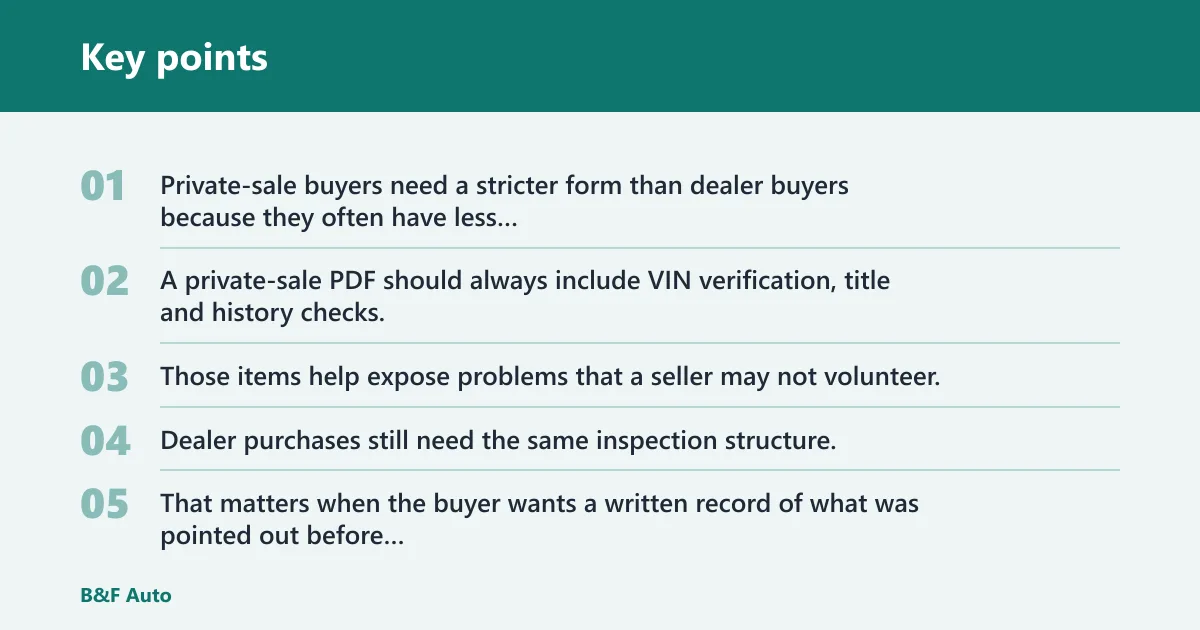
Private-sale buyers need a stricter form than dealer buyers because they often have less disclosure and fewer return options. A private-sale PDF should always include VIN verification, title and history checks, flood signs, rust checks, tires, brakes, and a road test summary. Those items help expose problems that a seller may not volunteer.
Dealer purchases still need the same inspection structure, but the notes field can also capture promises made by the seller or salesperson. That matters when the buyer wants a written record of what was pointed out before purchase.
Scoring, date, and sign-off fields
The PDF should include a score line for each section and a total summary at the end, along with a final decision field such as proceed, renegotiate, or reject. A simple count of passes and fails is enough if the form also marks safety-related failures separately. Add date, time, and signature lines for the buyer, and if possible, a seller acknowledgment line too.
Garage Auto’s vehicle form includes “exterior, interior, under hood, under vehicle, road test.” Garage Auto’s multi-point inspection uses “about 40 items,” which is a useful size target for a serious checklist. Garage Auto’s tire form tracks tread depth “in 32nds,” and its checklist includes “LF / RF / LR / RR and spare.” Those details are the kind of concrete fields a buyer should look for.
What should you verify before the inspection?
Before you inspect the car, verify the VIN, history report, recalls, and seller claims. A checklist is stronger when it starts with records, because paperwork can expose a mismatch before the buyer spends time on the car itself. That is especially useful in a private sale, where answers are often verbal rather than documented.
VIN match and location checks
Require the VIN to match in multiple places: the dashboard plate, driver-side door label, title or registration, and any service documents that list it. If the vehicle has photos in the listing, compare the visible VIN stickers where possible. A mismatch is a stop sign until the paperwork is corrected.
Use a dedicated VIN check field on the PDF, and record whether the VIN appears consistent across the car, the documents, and the seller’s listing. If the vehicle has electronic VIN display in the cluster or infotainment screen, add that location to the verification list too.
Vehicle history report and recall search
The history section should not be a single yes/no box. It should ask for crash history, service records, title branding, mileage consistency, and open recalls. That lets the buyer verify seller claims instead of accepting them at face value.
History reports can support the checklist, but they do not replace an in-person inspection. Use them to confirm what the seller said and to flag areas that need a closer look during the walkaround or test drive.
Seller claims versus records
Record any claim that matters to value or safety: one-owner, garage-kept, recent tires, recent brakes, or timing-belt service. Then mark whether the claim is backed by paperwork, matched by the vehicle condition, or contradicted by the records. A claim without support belongs in the notes, not in the buy column.
Suppose a seller says the front brakes were replaced last year, but the wheels show heavy brake dust, the pads measure near the wear limit, and the rotors have a lip. That combination should move the item from pass to needs attention or fail, depending on the severity and the buyer’s tolerance for immediate repair costs.
Exterior, interior, and engine bay checks
The body, cabin, and engine bay sections should be separate. That keeps small cosmetic flaws from hiding bigger mechanical issues. It also makes it easier to compare the same car across two visits if the buyer returns with a flashlight, a gauge, or a mechanic.
Exterior: panels, glass, lights, and rust
The exterior section should include scratches, dents, panel alignment, paint mismatch, broken trim, cracked glass, and all light functions. Add a line for rust location and severity, because surface rust and structural rust are very different findings. The form should tell the buyer to mark fail for cracked windshield glass, nonworking lamps, or obvious body repair signs that suggest accident damage.
Check panel gaps side to side, overspray on seals, and headlamp moisture that points to a poor repair. The checklist should leave room to note whether the damage is cosmetic only or likely tied to a larger collision repair.
Interior: odors, stains, tears, and electronics
The cabin section should cover odors, stains, wet carpet, seat tears, trim condition, gauges, windows, locks, mirrors, HVAC, infotainment, and warning lights. Musty odor deserves its own line because it can point to water intrusion, hidden leaks, or flood exposure. If the smell returns after the car has sat closed, treat that as a serious warning.
Say your checklist shows damp carpet under the floor mat and a fogged headlamp on the same side. That is not a cosmetic note; it is a pattern. The form should push the buyer toward a flood or water-entry review before money changes hands.
Engine bay: leaks, belts, hoses, fluids, and battery
The engine bay section should record visible leaks, belt cracking, hose swelling or cracking, fluid levels, fluid color, and odd noises at idle. The battery subsection should include case condition, terminal corrosion, cable fit, and any charging-related concern. A useful PDF should also tell the buyer to note whether the engine is cold or already warm before the start-up check.
If a car has oily residue around the valve cover, a cracked serpentine belt, and coolant crust on a hose end, those items should not be collapsed into one vague note. Each one can change the buyer’s decision and repair budget.
Should your checklist include underbody and road test items?
A useful used car inspection checklist PDF should include underbody, suspension, tires, wheels, OBD2 diagnostics, and a road test. That is where many expensive problems show up, including rust, leaks, steering issues, brake faults, and transmission concerns that do not appear in a parking lot walkaround.
Tires, wheels, and brake clues
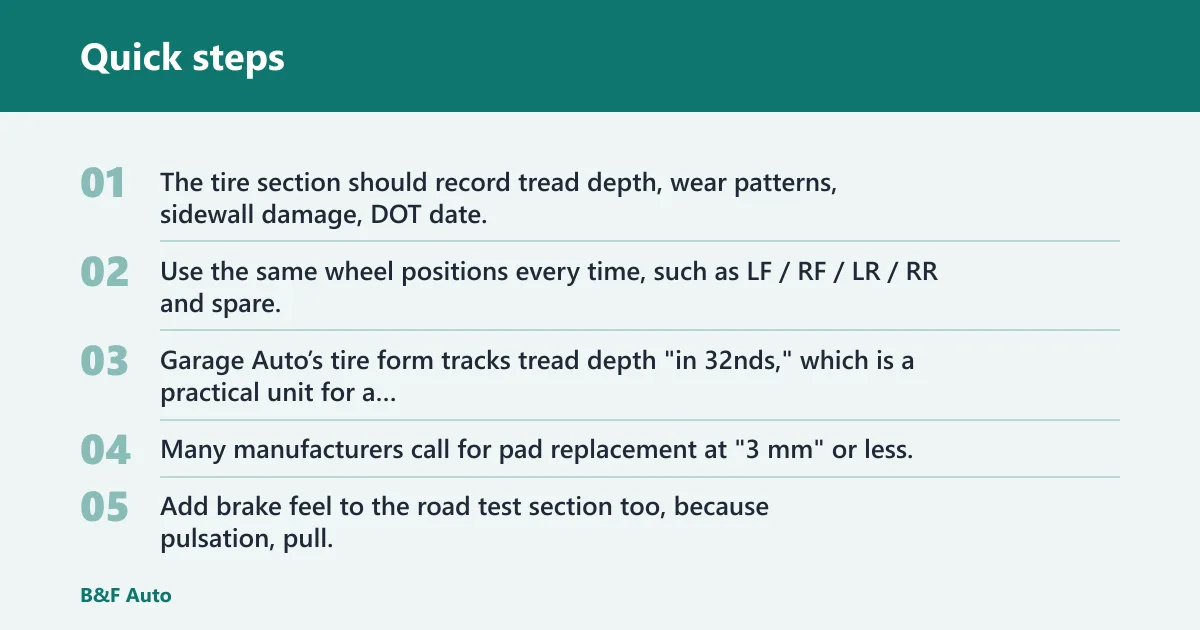
The tire section should record tread depth, wear patterns, sidewall damage, DOT date, brand matching, and pressure. Use the same wheel positions every time, such as LF / RF / LR / RR and spare, so the buyer does not miss a mismatch or a rotated defect. Garage Auto’s tire form tracks tread depth “in 32nds,” which is a practical unit for a printable checklist.
Many manufacturers call for pad replacement at “3 mm” or less, so a brake section should include pad thickness or a clear note that the pads need immediate attention. Add brake feel to the road test section too, because pulsation, pull, or delayed response can point to rotor, caliper, or hydraulic issues.
Underbody: rust, leaks, and suspension condition
The underbody section should record rust, fresh leaks, bent components, exhaust damage, missing shields, and suspension condition. It should also note whether the underside shows impact marks, torn boots, or uneven tire wear that suggests worn suspension parts. If the car sits low on one corner or clunks over small bumps, that belongs in the fail or needs-attention column.
The buyer should use the underbody field to note whether the damage looks localized or structural. Structural rust, frame damage, or fluid loss from a driveline component should trigger a mechanic review or a walk-away decision.
Test drive and OBD2 diagnostics
The road test section should include acceleration, braking, steering feel, vibration, noise, transmission shifts, and highway stability. Add boxes for cold start, stop-and-go driving, and a short higher-speed segment if conditions allow. The checklist should ask for what the car does, not what the buyer hopes it will do.
An OBD2 scan adds another layer. Use a standard scanner, record the code numbers, and confirm whether codes are current, pending, or historical. A single warning light is enough to justify a deeper look, especially if the same issue shows up in the road test.
When is a checklist not enough?
A checklist is not enough when it points to flood exposure, serious crash repair, active leaks, unsafe brakes, or multiple unrelated failures. In those cases, the PDF should not push the buyer toward optimism. It should give a clear walk-away or mechanic-inspection trigger.
Signs that call for a mechanic inspection
Consumer Reports says to take the car to a mechanic “for a thorough inspection,” and that advice fits any vehicle with unclear history, heavy wear, or an unexplained warning light. A mechanic should inspect anything that fails on the road test, shows suspicious underside damage, or has a history report that does not match the seller’s story. (Consumerreports)
What should a mechanic inspect on a used car before purchase? The PDF should direct the buyer to get a second look at the engine, transmission, brakes, suspension, steering, tires, and any fault codes that appear on the scan. That is the right move when the checklist turns up more than one major concern.
Flood, crash, and heavy wear red flags
Flood damage signs should be a dedicated section, not a side note. Include musty odor, silt in seams, water lines, corrosion in connectors, stained seat tracks, damp carpet, fogged instruments, and mildew in hidden corners. Any confirmed flood sign should be a fail item.
Crash damage needs the same treatment. Missing VIN labels, uneven panel gaps, paint mismatch, welded repairs, bent brackets, and misaligned lights should be marked clearly. If those signs appear together, the buyer should stop negotiating and reassess the car entirely.
Walk-away thresholds for buyers
A useful printable form should tell the buyer when to leave. Good walk-away triggers include VIN mismatch, open title problems, confirmed flood signs, structural rust, major brake failure, transmission slipping, or a history report that contradicts the seller’s story. If the checklist cannot support a safe yes, the answer should be no.
A common first-timer mistake is to treat several small failures as harmless because each one looks minor on its own. A worn tire, a dead switch, an oil leak, and a pending code can point to a car that needs more money than the purchase price suggests. The checklist should force that pattern into the open.
Frequently asked questions
What should a used car inspection checklist PDF include?
It should include VIN verification, history and recall checks, exterior, interior, engine bay, battery, underbody, tires, OBD2 codes, road test items, notes space, date, signature lines, and a final buy-or-walk-away decision. A useful PDF also labels each item Pass, Needs Attention, or Fail.
Is a used car inspection checklist enough without a mechanic?
It can be enough for a clean, low-risk car with good records and no warning signs, but it is not enough when the checklist shows leaks, flood clues, crash damage, or fault codes. In those cases, a mechanic inspection is still the safer move before you buy.
What items are on a pre-purchase used car inspection form?
A solid form covers paperwork, VIN, title and history, body panels, glass, lights, cabin condition, engine bay, battery, tires, wheels, brakes, underbody, suspension, OBD2 codes, and the road test. It should also leave space for measurements, observations, and a final decision.
What should I check on a used car before buying it?
Check the VIN, vehicle history report, recalls, seller claims, body damage, interior wear, fluid leaks, tire condition, brake wear, warning lights, and road feel. Do not skip the underbody or test drive. Those areas often reveal problems that a parked car hides well.
Should a used car checklist include engine, underbody, and test drive items?
Yes. Those sections catch leaks, rust, suspension wear, brake issues, odd noises, vibration, and transmission problems. A checklist that skips them is incomplete, because many costly defects do not show up in a quick exterior look or a short conversation with the seller.
What signs of flood damage should a used car checklist include?
Include musty odors, damp carpet, water lines, silt, corrosion in connectors, stained upholstery, fogged gauges, mildew, and residue in hidden seams. Any confirmed flood sign should be treated as a serious fail item, especially in a private sale where documentation may be thin.