How to Correct a Mistake on a Car Title
Fix a title mistake by matching the error to the DMV rule: a minor clerical error may be corrected on the existing title, but a crossed-out, altered, or unsupported change usually means you need a duplicate or reissued title. If you choose the wrong path, the DMV can refuse the transfer, hold up the sale, and send both parties back for more paperwork. This guide shows how to identify the error, decide whether correction is allowed, and take the next step if the title will not be accepted.
Identify the mistake
Start by reading the title exactly as the DMV will read it: name, VIN, odometer, sale date, purchase price, signatures, and any lien information. The key question is whether the mistake is a simple clerical error or a change that makes the title look altered, incomplete, or inconsistent with the vehicle record. In Florida, FLHSMV specifically rejects erased information, crossed-out text, correction fluid or white-out, and overwritten details, which is why the document’s condition matters as much as the error itself. See FLHSMV title correction guidance and Form 82101 instructions for the state’s correction process.
Decide if the title is salvageable
A signed title can sometimes be corrected, but only when the mistake is minor and the DMV accepts a correction process. If the error is clerical and the document has not been materially altered, a correction form may work. If the title has already been marked up in a way the DMV rejects, a duplicate or reissued title is usually safer than trying to repair the original. Florida’s Form 82101, the Affidavit of Correction, is the clearest example of a state correction form used for this purpose.
When the title is still salvageable
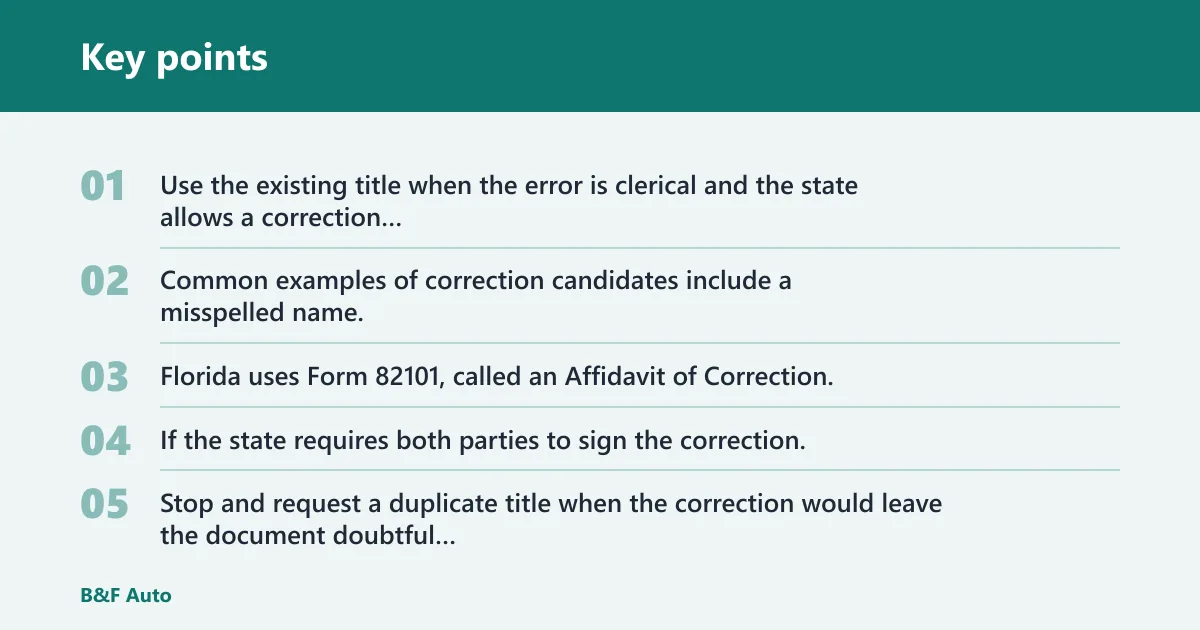
Use the existing title when the error is clerical and the state allows a correction process. Common examples of correction candidates include a misspelled name, an incorrect sale date, or an incorrect purchase price. Florida uses Form 82101, called an Affidavit of Correction, and FLHSMV requires the correction to support the record rather than overwrite it. If the state requires both parties to sign the correction, both buyer and seller must complete the form.
When to stop and request a duplicate title
Stop and request a duplicate title when the correction would leave the document doubtful or altered. Florida is a clear example: FLHSMV rejects erased information, crossed-out text, correction fluid or white-out, and overwritten details, so a duplicate title is the safer path when the original has already been marked up. In many states, a duplicate title is also the right answer when the original is damaged, illegible, or no longer trustworthy enough to support a transfer.
Why the DMV may reject altered entries
Alterations can make the record look changed after signing, and that creates a fraud or chain-of-title concern. Florida’s title correction guidance rejects white-out, erasures, cross-outs, and overwritten entries, and DMVs commonly treat those marks as evidence that the document has been materially changed. That is why a correction form is safer than handwriting over the old entry, and why a duplicate title is often the better answer when the existing document has already been marked up.
Choose correction form vs duplicate title
Use the narrowest fix the DMV will accept. If the state allows a correction form and the mistake is clerical, file the correction form. If the title has already been altered, the entry is inconsistent with the vehicle record, or the error affects identity or ownership, request a duplicate title instead of trying to patch the old one. For sale timing, remember that the seller’s job is not finished until the ownership transfer is accepted by the title office; until then, the buyer still faces rejection risk if the paperwork does not match the record.
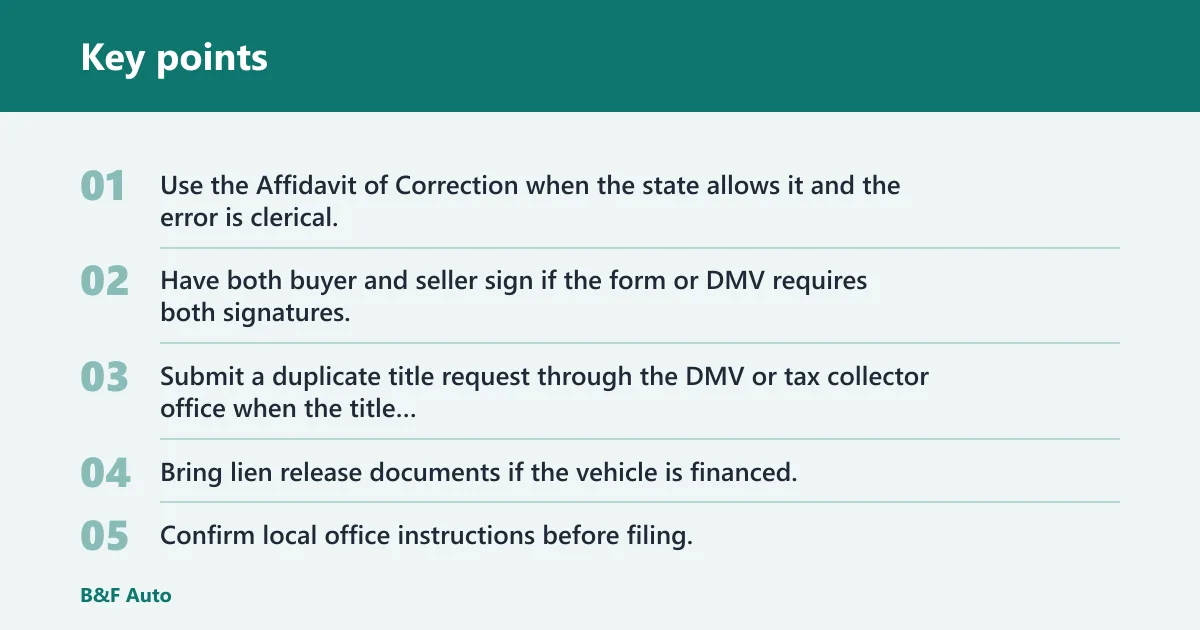
- Use the Affidavit of Correction when the state allows it and the error is clerical.
- Have both buyer and seller sign if the form or DMV requires both signatures.
- Submit a duplicate title request through the DMV or tax collector office when the title needs replacement.
- Bring lien release documents if the vehicle is financed.
- Confirm local office instructions before filing, because state rules control the final answer.
Title mistake decision table
| Error type | Still salvageable? | Correction form usually needed? | Duplicate title safer? | Who usually must sign | Likely DMV risk if left uncorrected |
|---|---|---|---|---|---|
| Misspelled name | Usually yes | Often yes | Sometimes | Usually seller; sometimes both parties if the state requires it | Name mismatch with ID or records |
| Wrong VIN | Often no | Sometimes | Usually yes | Usually the owner of record and, in some states, the buyer if transfer is pending | Registration rejection |
| Wrong odometer reading | Sometimes | Often yes | Sometimes | Often both buyer and seller, depending on state odometer-disclosure rules | Fraud concern and transfer delay |
| Incorrect sale date | Usually yes | Often yes | Sometimes | Usually buyer and seller if the form corrects a completed sale record | Transfer timing dispute |
| Incorrect purchase price | Usually yes | Often yes | Sometimes | Usually buyer and seller if the price was already reported | Tax or filing mismatch |
| Missing signature | Sometimes | Sometimes | Often yes | Missing signer must usually complete the signature block | Incomplete title |
| Signature in wrong place | Sometimes | Sometimes | Often yes | The signer may need to sign again in the correct area, if the DMV allows it | Document may be invalid |
| White-out, erasing, cross-outs, overwritten text | Usually no | Rarely | Usually yes | Usually no one should alter the existing entry; replacement is typically safer | DMV rejection |
State exceptions
States use different forms, signature rules, and office procedures, so the same mistake can have a different result depending on where the car is titled. These examples answer the most common selling-related questions for New Jersey, North Carolina, and Michigan.
New Jersey
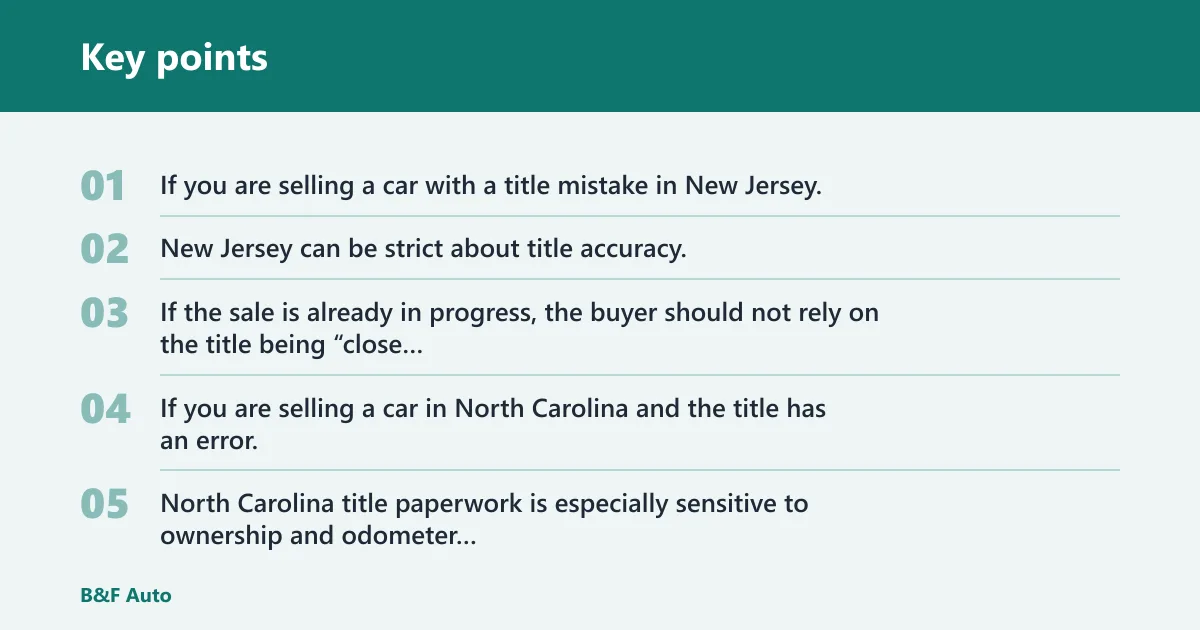
If you are selling a car with a title mistake in New Jersey, the safest question is whether the MVC will accept a correction or require a replacement title. New Jersey can be strict about title accuracy, so do not assume a crossed-out or overwritten entry will be accepted at transfer. If the sale is already in progress, the buyer should not rely on the title being “close enough”; confirm whether the MVC wants a corrected title, a duplicate title, or a fresh reassignment before the sale is finalized.
North Carolina
If you are selling a car in North Carolina and the title has an error, check whether the NCDMV will accept a correction without replacing the title. North Carolina title paperwork is especially sensitive to ownership and odometer accuracy, so a mismatch can interrupt the transfer. If the error involves the sale or transfer record, ask whether the seller needs to obtain a duplicate or corrected title before the buyer can complete registration.
Michigan
If you are selling a car in Michigan with a title mistake, verify whether the Secretary of State will accept the current title as corrected or whether a duplicate title is required. Michigan buyers and sellers should be especially careful with VIN, odometer, and signature placement because those errors can block the ownership transfer. If the title is already altered or the wrong information was written in a signature area, replacement is usually safer than trying to keep the old title alive.
What if the seller is unavailable?
If the seller cannot sign a correction, the answer usually depends on state rules and on whether the buyer already has possession. When both parties disagree, a DMV may refuse the correction and require a duplicate title or a formal replacement process. That is where local title office rules matter most.
When both parties disagree on the correction
A disagreement over the date, price, or name usually blocks a simple correction. The DMV will not guess which version is correct. If the parties cannot agree, ask the local title office whether the document must be replaced rather than amended.
When the buyer already has possession
If the buyer has the car but the title is wrong, the buyer can still face a registration delay, insurance delay, or title mismatch after purchase. A wrong VIN can sometimes stop registration completely. A wrong odometer entry can also trigger fraud concerns, especially if the mileage on the title does not match the vehicle record. Odometer disclosure is not optional in many transfers, so the office may require a corrected disclosure statement or a replacement title record rather than a handwritten fix.
When the lienholder has not released the title
Do not treat a financed vehicle like a simple private sale. A missing lien release can block ownership transfer even if the rest of the title looks fine. Most states require the lien to be released before the title can be reassigned cleanly, and the title office may refuse to process a correction or duplicate until the lienholder’s interest is cleared. Resolve the lien status first, then correct the title or request a duplicate if the DMV requires replacement.
Reject checklist for title office visits
If you are walking into a DMV or title office, use this quick rejection checklist before you wait in line. These are the most common reasons a clerk will stop the file and ask you to start over:
- Altered text, including white-out, erasing, or cross-outs on a signed title.
- Wrong signature area, including a signature placed outside the designated block.
- VIN mismatch between the title and the vehicle record.
- Odometer mismatch or missing odometer disclosure paperwork where required.
- Open lien or missing lien release when the vehicle is financed.
Common mistakes
Three errors are commonly cited as leading to rejections: altered text, bad placement, and mismatched vehicle data. Fix them in the right order, because a correction that looks neat on paper can still fail if it breaks the DMV’s signature or identity rules.
- Do not use white-out, erasing, or cross-outs on a signed title.
- Do not sign outside the designated signature area.
- Do not ignore a VIN mismatch, even if the rest of the title looks fine.
- Do not submit an odometer correction without the proper mileage paperwork when the state requires it.
- Do not transfer a financed vehicle until the lienholder release is in hand.
Say your title has “Smiht” instead of “Smith” and nothing else is wrong. That is usually a correction-form problem, not a duplicate-title problem. Now change only one thing: the name is correct, but the VIN has one wrong digit. That error is much more likely to stop registration and push the file toward replacement.
Suppose the seller signed in the buyer signature block by mistake. If the state treats placement as mandatory, the DMV can reject the title even though the signature is present. The safest next step is to check the local title office before adding anything else to the document.
Prevention
Before anyone signs, read every line against the vehicle record and the ID cards. One minute of review can prevent a rejection that turns a same-day transfer into a second trip to the DMV.
Frequently asked questions
Can you sell a car with a title mistake?
Sometimes, but the sale may stall if the DMV will not accept the title. A misspelled name or wrong date may be fixable, while a wrong VIN or altered entry can block transfer. Confirm the correction path before handing over the vehicle or payment, and make sure the ownership transfer paperwork matches the record before the buyer leaves.
Do you need a correction form for title mistakes?
Often yes for clerical errors, especially misspelled names, incorrect sale dates, and incorrect purchase prices. Florida uses Form 82101 as an Affidavit of Correction, and FLHSMV requires the correction to support the title record rather than overwrite it. Other states may require a different form or a duplicate title instead.
Can white-out or cross-outs void a signed car title?
Yes. Florida rejects erased information, crossed-out text, correction fluid or white-out, and overwritten details. Even outside Florida, those alterations can trigger DMV rejection because they suggest the title was changed after signing. If the document has already been marked up, ask whether a duplicate title is safer than trying to correct the old one.
What should I do if my car title has a wrong VIN or odometer reading?
Verify the vehicle record first, then check with the DMV or local title office before transferring the car. A wrong VIN can stop registration, and a wrong odometer entry can raise fraud concerns. In some cases, a correction statement is needed; in others, a duplicate title is the better path. If the state requires odometer disclosure on transfer, follow that rule before sale timing becomes a dispute.