Can You Trade in a Car That Is Not Paid Off?
Yes—you can trade in a car that is not paid off if the dealer pays your lender and the trade value covers the loan balance, or you pay the difference. If the payoff is handled poorly, negative equity can move into the next loan, raise the payment, and leave the old loan open. This guide shows how to compare payoff, equity, and dealer offers, when a financed trade-in is safe, and how to confirm the loan is fully closed.
This guide is part of our Trade-in paperwork: what you need and how it works series.
Get your loan payoff figure first
Yes, a financed trade-in is usually possible. The key decision is whether the dealer’s offer is enough to clear the lender’s payoff amount, or whether you can cover any shortfall. Start with the lender’s settlement figure, not the statement balance, because those numbers can differ.
Find your payoff amount first
The payoff amount is the amount needed to clear the loan in full. It may differ from your statement balance because interest keeps accruing, and late fees or other charges can change the total. The CFPB says to find out how much you still owe before deciding.
-
Request the settlement figure.
Call or message the existing lender and ask for the exact payoff or settlement figure good through a specific date. Ask whether the quote includes per diem interest, any late fees, and any early settlement fee if your contract allows one. -
Compare the date carefully.
A payoff quote is generally time-sensitive. If the dealer sends payment after the quote expires, a small balance can remain open and the old loan may not close cleanly. -
Keep the quote in writing.
Save the payoff letter or screen capture with the date range and account number. You will need it if the dealer and lender disagree about the final amount.
Suppose your statement balance shows $12,800, but the lender’s payoff quote is $12,965 because interest is still adding up. The $165 difference matters. Use the payoff figure, not the older statement balance, when you judge the trade.
Compare payoff amount and trade-in value
Once you have the payoff figure, compare it with the dealer’s trade-in value. The CFPB says to compare your payoff amount with the trade-in value. Car and Driver notes that the dealer deducts trade-in value from the purchase price, so the number affects how much you finance next.
| Payoff amount | Estimated trade-in value | Next-step outcome |
|---|---|---|
| $18,400 | $20,000 | Yes. Positive equity of $1,600. That surplus can reduce the amount borrowed on the next vehicle or act like a down payment credit. |
| $15,000 | $15,000 | Yes. Break-even. The trade covers the loan, but there is no equity left to lower the next loan amount. |
| $17,500 | $14,200 | No. Negative equity of $3,300. You must pay the difference or decide whether to roll it into the next loan. |
| $9,600 | $10,100 | Yes. Positive equity of $500. Confirm the dealer applies it to the new deal as cash back, a down payment credit, or a lower amount financed. |
| $8,750 | $8,750 | Yes. Break-even. Confirm the dealer still sends the payoff on time so the loan closes at zero balance. |
| $13,900 | $11,500 | No. Negative equity of $2,400. Ask how it changes the monthly payment and the total loan cost before agreeing to a rollover. |
| $0 after closing | N/A | Yes. Verification step. The old lender should show a zero balance and the lien should be released after the dealer’s payoff clears. |
Use the equity result to choose the path
Positive equity means the trade-in is worth more than the payoff amount. That difference can lower the amount you borrow on the next vehicle, and in some deals it acts like a down payment credit. The trade is usually straightforward if the dealer’s appraisal is close to market value.
Break-even means the trade value and payoff amount are the same. The loan is covered, but there is no extra value to reduce the next loan. This is often the cleanest financed trade-in if the numbers are accurate and the payoff date is handled correctly.
Negative equity means you owe more than the car is worth. That shortfall can be paid off separately or rolled into a new auto loan, but rolling it over raises the amount financed and total interest paid. The CFPB warns that this increases total loan costs. (Consumerfinance)
What happens if you owe more than the car is worth?
If you owe more than the trade-in value, the shortfall does not disappear. The dealer may offer to roll negative equity into the new loan, which lets the deal move forward but increases the amount financed. That can make the next loan more expensive, especially if the term gets longer.
How loan rollover works
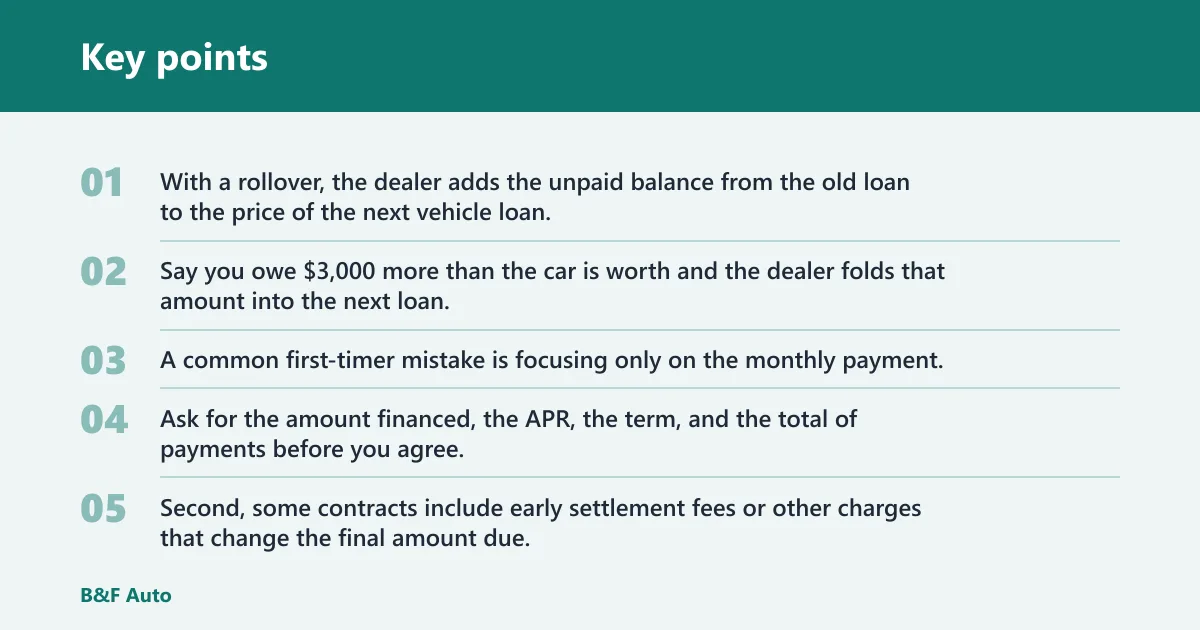
With a rollover, the dealer adds the unpaid balance from the old loan to the price of the next vehicle loan. The CFPB says dealers may offer to roll negative equity into a new auto loan, and it also warns that doing so raises total loan costs. The old debt becomes part of the new debt.
Say you owe $3,000 more than the car is worth and the dealer folds that amount into the next loan. If the rest of the deal is already tight, that extra $3,000 can push the monthly payment up and add interest on money that was never tied to the new car.
When rolling debt stops making sense
Rolling negative equity is a bad fit when the new monthly payment stretches your budget, or when the loan term becomes long enough that interest piles up on both the car and the rolled balance. It can also be a problem if the new vehicle loses value faster than the loan balance drops.
A common first-timer mistake is focusing only on the monthly payment. A lower payment can come from a longer term, but the total cost may still rise because you are financing the old balance for more months. Ask for the amount financed, the APR, the term, and the total of payments before you agree.
Check for timing and fee problems
Two edge cases can create trouble. Interest may keep accruing until the lender gets the payoff, so a quote that looked accurate a few days earlier can sometimes fall short. Second, some contracts include early settlement fees or other charges that change the final amount due. A dealer-lender timing delay can leave a small residual balance behind.
What paperwork do you need for a financed trade-in?
Dealers often ask for the loan information, registration, and proof of insurance. Car and Driver says the dealership will inspect the vehicle and may include a test drive. The exact packet can vary by state and dealer, but the payoff details and ownership documents are the ones that matter most for closing the loan cleanly.
Gather the loan and vehicle records
-
Collect lender details.
Bring the lender name, account number, payoff quote, and any payoff instructions. These details help the dealer send the correct amount to the right place. -
Bring registration and insurance.
Have the current vehicle registration and proof of insurance ready. Car and Driver says those documents commonly belong with the loan records when you trade in a financed vehicle. -
Prepare title and lien information.
If you have a copy of the title or lien paperwork, bring it. The dealer may need it to confirm the lienholder and finish the transfer without delays. -
Ask how payoff timing works.
Confirm whether the dealer sends the payoff immediately or after the sale closes, and ask what happens if the lender charges additional daily interest before payment posts.
What the dealer may inspect
The appraisal is not a final sale price for your next vehicle. It is the dealer’s estimate of your current car’s trade value after an inspection, and that inspection may include a test drive. Multiple dealership quotes matter because the CFPB recommends checking more than one trade-in estimate.
One dealer may offer more because it can retail the vehicle easily. Another may deduct more for wear, tires, or cosmetic issues. Ask for the written appraisal amount so you can compare offers on the same basis.
Trade-in decision checklist
This checklist turns the numbers into a yes-or-no decision. Use the payoff amount, not the statement balance, and do not skip the follow-up checks after the sale closes.
| Payoff amount | Estimated trade-in value | Next-step outcome |
|---|---|---|
| Payoff is lower than trade value | Trade value is higher than payoff | Yes. Positive equity. Ask the dealer to apply the surplus to the next deal as a credit or lower amount financed. |
| Payoff matches trade value | Trade value equals payoff | Yes. Break-even. Proceed only if the payoff quote is current and the dealer confirms the lender payment date. |
| Payoff is higher than trade value | Trade value is lower than payoff | No, unless you accept rollover or pay cash. Negative equity means you owe the shortfall. |
| Quoted payoff is outdated | Any estimate | No. Request an updated settlement figure before signing. Interest, late fees, or settlement charges may have changed the amount. |
| Dealer says balance will be paid later | Any estimate | Proceed with caution. Get the payoff timing in writing so a delay does not leave a small open balance. |
| After sale, lender shows $0 balance | N/A | Yes. Keep the paid-off record and wait for the lien release to post. |
| After sale, lien is still active | N/A | No. Follow up until the lien release is recorded and your payoff records show closure. |
How do you confirm the old loan is paid off?
Do not assume the deal is closed just because you signed the paperwork. You need two confirmations: a zero balance from the lender and a lien release on the vehicle record. Keep the payoff paperwork until both are posted, because dealer-lender timing delays can leave a small balance open.
Verify zero balance and lien release
-
Check the lender account.
Log in or call the existing lender and confirm the auto loan shows a zero balance after the payoff posts. If a small amount remains, ask whether it is accrued interest, a fee, or a processing delay. -
Wait for the lien release.
The lender should release the lien after the loan is satisfied. The release may appear in the lender account first and in public records later, so keep checking until both are complete. -
Save every payoff record.
Keep the payoff quote, dealer sale paperwork, lender confirmation, and any lien release notice. Those documents matter if a late fee, timing issue, or clerical error reopens the question later.
If the lender still shows a balance after the dealer says the loan was paid, call the lender and the dealer right away. A payoff sent after the quote expired can leave a residue that needs a second payment. That is why the settlement figure date matters so much.
Frequently asked questions
Can you trade in a car that is not paid off?
Yes. You can usually trade in a car that still has a loan balance if the dealer pays your lender and the payoff is handled correctly. Start with the lender’s settlement figure, compare it to the trade-in value, and confirm the old loan closes at zero with the lien released.
Can you trade in a car that is not fully paid off?
Yes, if the trade value covers the payoff amount or you cover the difference. If the trade is worth less than what you owe, the shortfall is negative equity and may be rolled into the new loan, which raises the amount financed and total interest.
Can you trade in a car that’s not paid off?
Yes. The dealer can pay off the existing lender as part of the deal, but you should use the payoff amount rather than the statement balance. If there is positive equity, it can reduce the next loan; if there is negative equity, you need to decide whether to pay it or roll it over.
How do I find my payoff amount before trading in?
Contact the existing lender and request the settlement figure for a specific date. Ask whether the quote includes interest to that date, late fees, or any early settlement charge. Do not rely on the statement balance, because it may not match what is actually needed to close the loan.
How do I know my old loan was actually paid off?
Confirm that the lender account shows a zero balance after the dealer’s payoff posts, then wait for the lien release. Keep the payoff quote, sale paperwork, and lender confirmation. If a small balance remains, contact both parties quickly so it does not turn into a lingering open account.