Title Signing Mistakes in Bad Weather: How to Avoid
Use a dry, bright spot, and do not sign until you can read every title field clearly. Bring at least one bright light and one backup pen. Bad weather and poor light make it easy to miss a signature, cross out the wrong line, or ruin a title that a DMV may reject. Because title-transfer, odometer, and notarization rules vary by state, check the exact instructions on your state title before you write. This article covers a weatherproof, low-light signing setup, the checks to do before you write, and the mistakes to avoid.
What makes bad weather risky when you sign a title?
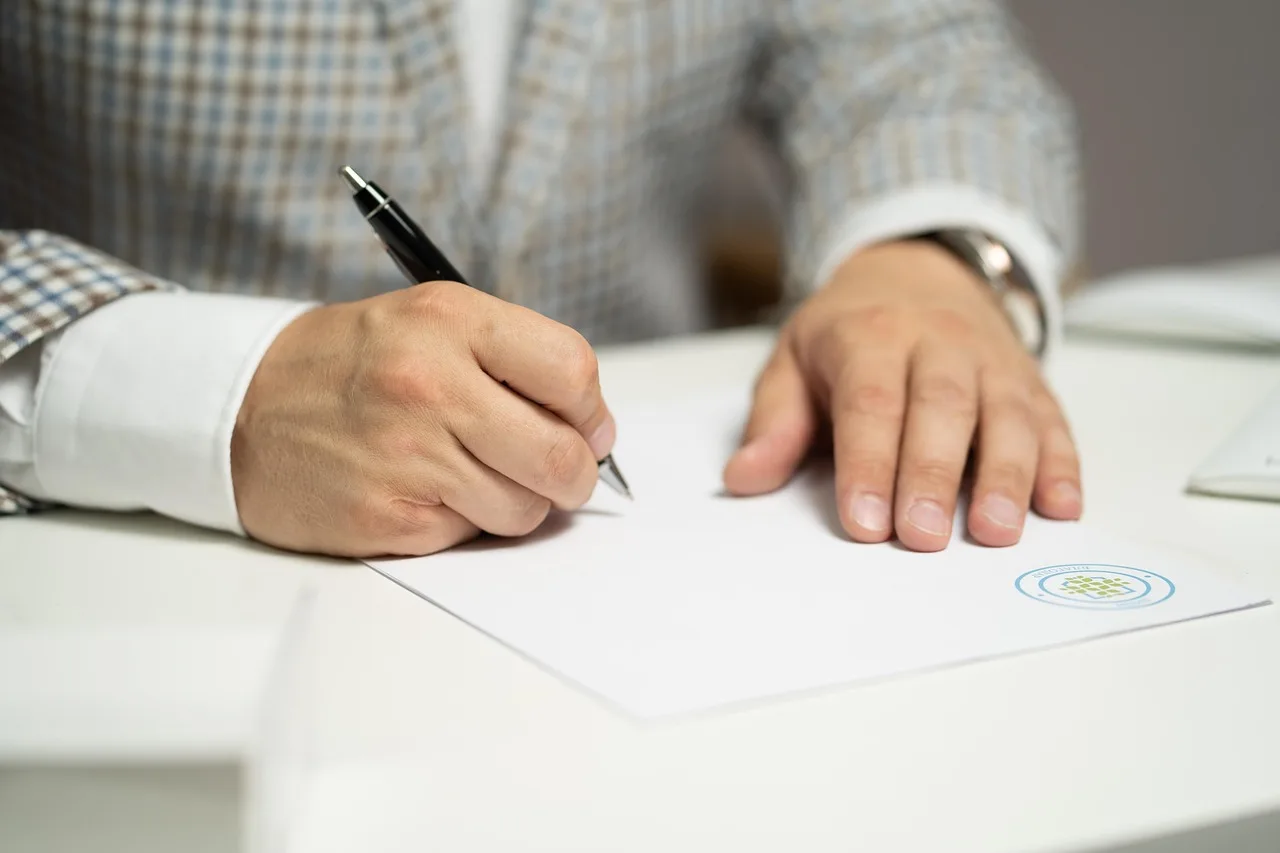
Wet paper, glare, and wind change how a title handles before anyone writes. Rain and snow can blur ink, cold fingers can slip across the wrong line, and poor lighting can hide a buyer name field, date field, odometer section, or notary section that still needs attention.
Why do wet paper and smudged ink cause transfer problems?
Title paper can wick moisture fast. A damp corner can turn a clear signature into a blurred line, and a wet thumb can drag ink from one box into the next.
Use a dark, permanent, quick-drying pen with legible ink. Low light already makes the form harder to read. If the paper feels cool and clammy, keep it in a sleeve until the moment you write.
How do glare, shadows, and poor visibility create mistakes?
Streetlights, headlights, and a phone screen can all create glare on glossy or laminated surfaces around the title. Shadows over the signature box make it easy to sign one line too low or miss a required date entry.
A flashlight or headlamp helps only if the beam is aimed across the page, not straight into your eyes. The goal is even light over the title, not a bright spot that washes out fine print.
Why do wind, cold fingers, and rushing increase the risk?
Wind can flip a loose title, and cold fingers can make a signature look shaky or incomplete. If the form bends while you write, a date can land outside the correct field or an odometer entry can end up unreadable.
Rushing is the other risk. A private sale in a parking lot can feel quick, but a single missed field can send the buyer back to the DMV or title office.
What should you bring for a cleaner handoff?
- Dark permanent pen. Bring a second pen in the same ink color if possible. A backup helps if the first one skips in cold air or on damp paper.
- Flashlight or headlamp. Hands-free light keeps both hands on the title and pen. Aim the beam from the side so it does not cast a shadow over the signature line.
- Plastic sleeve or clipboard. A sleeve keeps the title dry until signing, while a clipboard gives a flat writing surface and helps resist wind.
- Government-issued ID and note card. The ID supports name matching, and a small note card can list the title sections you need to check in order.
Picture a gas-station awning at dusk, with the buyer waiting by the curb. A clipboard keeps the paper flat, and a headlamp keeps both the buyer name field and seller signature line visible without moving the title onto a wet car hood.
How do you check the title before anyone signs?
Read the title before any ink touches it. Verify the buyer name field, seller signature line, date field, and the mileage or odometer section if your state requires it, along with any notary section that applies, before agreeing on where to write. Because these details are state-dependent, follow the exact order printed on the form when your title uses a different layout.
How do you match the buyer name to the title?
Check the buyer’s government-issued ID against the name that will be written on the title. Look at the full legal name, the photo, and the expiration date, because an expired or mismatched ID can create a problem before the form is complete.
If the title has a buyer name field, fill it only after you confirm the spelling. A nickname or missing suffix can matter more on paper than it does in conversation.
How do you check the signature line, date, and mileage section?
Some state titles place the seller signature line near the bottom, while others use separate blocks for date and mileage. Read the exact form layout, because the wrong line can be as costly as a missing signature in bad weather.
If the odometer disclosure is required, locate that section before anyone writes. In low light, the mileage box can be mistaken for a note area or overlooked entirely.
How do you confirm whether a notary section applies?
Not every transfer needs a notary, and rules vary by state. If your title includes a notary section, confirm whether the notary must witness the signature in person, whether outdoor witnessing is allowed, and what ID the notary needs to see.
Do not assume the notary can sign after the fact if weather gets worse. In states that require notarization, signature order can matter.
What order should you read the fields in?
- Start with the buyer name. Match it to the ID and confirm spelling, suffixes, and any middle initial that the title asks for.
- Move to the date. Make sure the day, month, and year go in the correct boxes or line, especially if the form uses a different format than you expect.
- Check the mileage entry. Fill in the odometer section only if your state requires it, and confirm the number before anyone signs.
- Finish with signatures and notarization. Write only on the seller signature line and follow the required order if a notary must witness the transfer.
What should you check before a bad-weather title signing?
Use this checklist before anyone writes on the form. It is built for rain, snow, dusk, and parking-lot handoffs where a missed line is easy to create and hard to fix.
| Check | What to verify | Why it matters in bad weather |
|---|---|---|
| Lighting | Bright enough to read the buyer name field, signature line, date field, and any odometer box | Low light hides missing fields and makes the wrong line easier to sign |
| Dry surface | Title stored in a sleeve or held over a clipboard, not on a wet car panel | Dry paper accepts ink cleanly and resists smears |
| Pen choice | Dark, permanent, quick-drying pen with legible ink | Smudge resistance matters when fingers are cold or the air is damp |
| Name match | Buyer name on the title matches government-issued ID | Prevents spelling errors and mismatched transfer details |
| Signature order | Follow the state form order and any notary instruction | Some forms must be signed before notarization, and some notary blocks are location-specific |
| Last read | Check every field one final time before handoff | Small errors are easier to catch before the buyer leaves |
What belongs on a 5-minute bad-weather title checklist
- Set the light first. Turn on a flashlight or headlamp and aim it across the title so the page is bright without a shadow over the signature box. This is the fastest way to see fine print before anyone writes.
- Dry the writing area. Keep the title inside a plastic sleeve until the moment of signing, then move it onto a clipboard or another flat, dry surface. If the paper is damp, stop and dry it before you continue.
- Check the pen. Use a dark permanent ink pen that writes clearly in low light and dries fast enough to resist smudging. Keep a backup pen within reach in case the first one skips.
- Match the names. Compare the buyer’s government-issued ID with the buyer name field on the title and check the photo, spelling, and expiration date. If the name does not match, do not sign yet.
- Confirm the required fields. Read the title section by section: seller signature line, date field, mileage or odometer section if required, and notary section if applicable. This order helps prevent missed lines in a rushed handoff.
- Do a final read. Before handing over the title, read every completed field again under the same light. Look for unreadable ink, a wrong date, a skipped signature, or any line that needs a correction you should not make in the rain.
How do you sign without smudges or cross-outs?
Sign slowly enough to stay inside the correct box, and keep the pen moving only on dry paper. Use dark permanent ink, keep the form flat, and do not write over wet ink or try to erase mistakes with white-out or a fresh line.
What is the safest writing setup?
A clipboard is better than a car hood, trunk lid, or lap when wind is present. The flat surface keeps the title from flexing, which helps the signature stay legible and inside the correct line.
If the notary section is present, keep that area visible too. A cramped setup can force the signer to rotate the page and introduce a crooked entry.
How do you keep the pen and paper dry?
Hold the title only at the edges when rain or snow is falling. A plastic sleeve can keep the form protected until the moment of signing, then you can slide it out long enough to write and return it immediately afterward.
Humidity can also slow drying. If the ink still looks glossy, do not stack another page on top of it.
A common first-time mistake is signing the seller line while the buyer stands beside the form and then discovering the date field was above that line in the state-specific layout. The fix is not a guess; it is a pause, a full read, and a clear check of the exact boxes before writing.
When should you stop and move indoors?
If the setup feels unsafe, stop. If the wind is strong enough to lift the page or the rain is soaking through the sleeve, move to a drier, better-lit fallback location. A covered entryway, garage, or indoor spot is safer than a hurried curbside signature on wet paper.
Should buyer and seller fill out the title together in bad weather? Yes, if that helps both people confirm each field before anyone signs, but only when the form stays dry and readable. Fill it out side by side, then read it once more under the same light.
What should you do if the title gets wet or someone rushes you?
If the title gets wet, pause before writing and dry the paper enough to read every field clearly. If the buyer rushes, stop the process until you can inspect the form in good light and verify the name, date, and signature spots without guessing.
How do you dry the paper before writing?
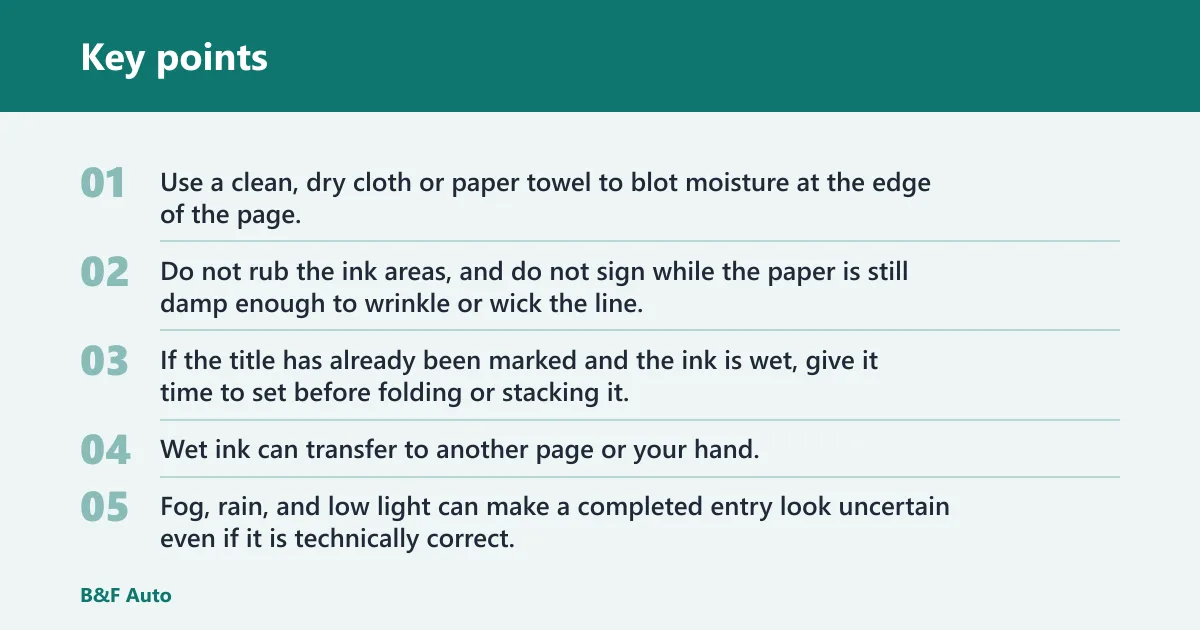
Use a clean, dry cloth or paper towel to blot moisture at the edge of the page. Do not rub the ink areas, and do not sign while the paper is still damp enough to wrinkle or wick the line.
If the title has already been marked and the ink is wet, give it time to set before folding or stacking it. Wet ink can transfer to another page or your hand.
What if the line is unreadable?
Fog, rain, and low light can make a completed entry look uncertain even if it is technically correct. If you cannot read a name, date, or mileage figure, do not hand the title over until the entry is clear.
Use the flashlight again and tilt the page. Sometimes the problem is not the writing itself, but the angle of the beam over the box.
When should you use an indoor fallback?
Should the weather turn worse, move the signing indoors if the buyer agrees and the state’s notary rules still allow the transfer to proceed. The fallback should be dry, bright, and flat enough to read and write without extra strain.
This is especially important for titles with a notary section, since a witness may need a specific setting or ID check that is easier to complete indoors.
What should you do if you notice a mistake before handoff?
If you notice a wrong line, unreadable signature, or missed field before the buyer leaves, stop and contact the DMV or title office for the correct next step. Do not guess at a correction method on a wet form, and do not use white-out or a fresh scribble to hide the error.
What if the title gets wet before the buyer takes it? Keep it flat, dry it gently, and make sure the completed entries are still legible. If the page is damaged enough that a field is unclear, treat it as a paperwork problem, not a cosmetic one.
Frequently asked questions
How do I sign a car title correctly in the dark?
Use a headlamp or flashlight, a dry clipboard, and a dark permanent pen before you sign anything. Then read the title field by field, confirm the buyer name and date, and write only on the correct seller line once the page is fully visible.
What if it’s raining when I hand over the title to a private buyer?
Keep the title in a plastic sleeve until you are under cover or at least on a dry, flat surface. If rain is hitting the page, dry it before writing and avoid folding it while the ink is still fresh. Wet paper can turn a correct signature into an unreadable transfer.
Can I use a flashlight to check the title before signing?
Yes, and you should if low light makes the form hard to read. Aim the beam across the page so it does not throw shadows over the signature box, and use the light to check fine print, not to replace a dry surface or a stable writing setup.
How do I avoid signing in the wrong spot when I’m rushed?
Read the title in the same order every time: buyer name, date, mileage or odometer section if required, seller signature line, and any notary section. A short note card with those fields listed can help you slow down and confirm each box before you write.
What if the title gets wet before the buyer takes it?
Blot the moisture gently and keep the page flat until the ink is dry and the text is still readable. If rain or snow has blurred a field, do not hand it over as if nothing happened; contact the DMV or title office for the proper next step if the damage affects the entry.
Should I wait until I’m inside to sign the title?
Yes, if the weather, light, or wind makes the form hard to read or hold steady. Indoor signing is often the safer choice when a notary is involved, when the paper is damp, or when the parking lot lighting hides the exact line you need.