California Title Signed in the Wrong Spot: How to Correct It
If the California title was signed in the wrong spot, first identify the bad box: seller signature, buyer signature, odometer disclosure, or the reassignment area on the back. A single misplaced signature may still be fixable if the title is clean and readable. Heavy corrections, repeated signing, or an odometer mistake usually point to a duplicate or a fresh transfer.
What counts as the wrong spot?
Front and back assignment areas
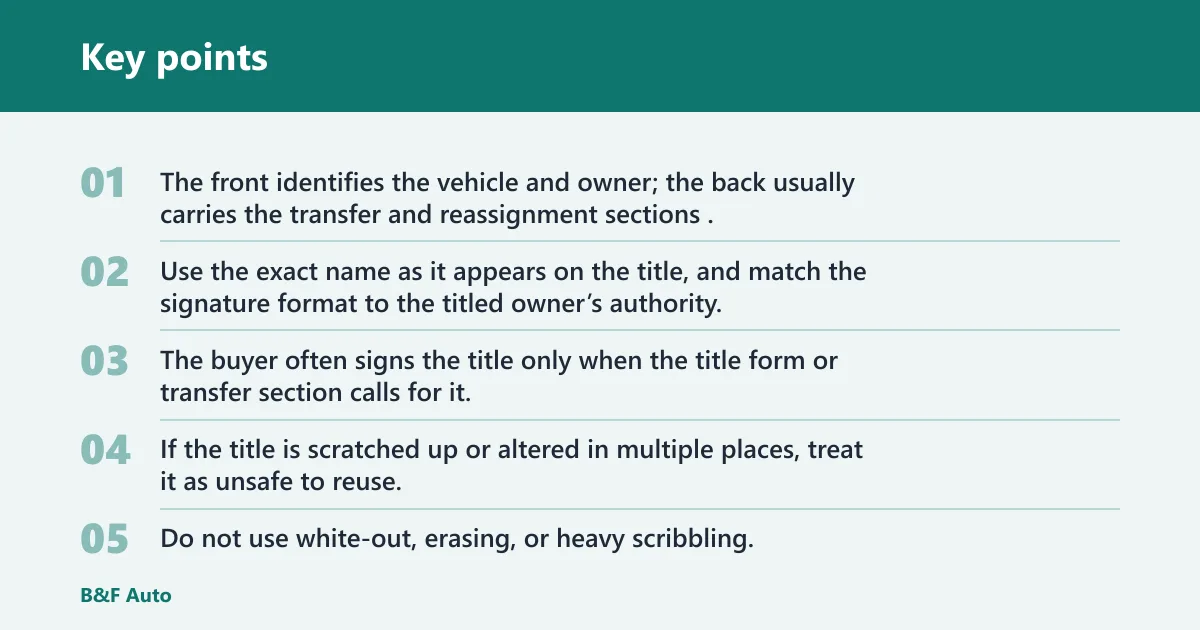
California Certificate of Title forms usually have separate areas for the registered owner or seller, the buyer or transferee, and the odometer disclosure. The front identifies the vehicle and owner; the back usually carries the transfer and reassignment sections. Use the exact name as it appears on the title, and match the signature format to the titled owner’s authority.
The buyer often signs the title only when the title form or transfer section calls for it. In some transfers, the buyer signs DMV paperwork instead, especially when the title itself should not be altered further. That difference matters because a buyer’s signature in the wrong place can create a transfer sequence problem.
When the title is still readable enough to repair
A title is more likely to be fixable when the mistake is isolated, the original printing is clear, and no one has tried to hide the error. If the wrong line was signed but the correct line remains untouched, DMV may accept a correction with supporting paperwork. If the title is scratched up or altered in multiple places, treat it as unsafe to reuse.
Do not use white-out, erasing, or heavy scribbling. Those fixes usually make the document harder to process and can turn a small mistake into a rejected transfer.
California title correction decision tree
Use the least disruptive fix that still leaves DMV a clean record. Keep the original title only when the error is minor, obvious, and not materially altered. Replace the title when the document has repeated mistakes or heavy correction marks. Restart the transfer when the buyer line, odometer disclosure, or ownership authority is no longer reliable.
- Check the exact error. Identify whether the wrong spot is the seller signature box, buyer line, odometer area, or reassignment section. The safest next step depends on that location, not on whether both parties agree that the mistake was accidental.
- Look for alteration damage. If the title has white-out, erasure, scribbling, or multiple cross-outs, treat it as high risk. DMV may reject a document that is hard to read or that appears altered after signing.
- Decide whether a clean correction is possible. If the mistake is minor and the unneeded signature can be ignored without confusing the transfer, a Statement of Error may support the filing. If the error sits in the ownership chain or odometer disclosure, a fresh title is often safer.
- Choose duplicate or restart. If the original title cannot be safely corrected, the registered owner should request a duplicate title before the transfer is resubmitted. If the buyer line or odometer disclosure is wrong, the parties may need to start over on a clean title and new transfer paperwork.
Say the seller signed in the wrong box on the back, but the correct seller line is still empty and the odometer disclosure is untouched. That may be a fixable error if DMV can still follow the ownership chain and the correction is explained on the proper paperwork. If the same title also has a crossed-out buyer name, the safer path shifts to replacement.
Picture a title with the seller signature in the wrong place and the odometer line also completed incorrectly. Even if both parties agree what happened, that is no longer a simple one-line correction. The safest next step is usually a clean duplicate title or a restarted transfer with the correct disclosure sequence.
When do you need a duplicate title?
A duplicate title is appropriate when the original document cannot be safely reused for transfer or correction. California uses REG 227, Application for Duplicate or Paperless Title, when the registered owner needs a replacement title. It is not a universal cure for every signing error, and it does not automatically fix a bad assignment sequence.
How REG 227 fits a damaged or unusable title
Use REG 227 when the original title is lost, stolen, damaged, or so altered that DMV is unlikely to accept it for a normal transfer. The application is tied to the registered owner’s authorization. If the title still shows a simple mistake that can be explained clearly, DMV may prefer correction paperwork instead of a duplicate request.
That is why a duplicate is not always the right answer for a wrong signature box. If the title remains readable and the transfer chain is intact, a Statement of Error may be the better support document. If the document is heavily marked up, the duplicate route is more realistic.
When the registered owner must authorize the duplicate
The duplicate title request comes from the registered owner or another party who has legal authority to act for that owner. The name on the title matters. If the current title shows two owners with joint ownership wording, the exact AND or OR wording can affect who may sign the duplicate request and who must sign the transfer.
That authority issue matters because a duplicate title does not replace the need for valid transfer signatures. It only gives you a cleaner title to work from.
California DMV forms and documents
Three DMV forms come up often when a title was signed wrong: REG 227 for a duplicate or paperless title, REG 256 for a written explanation of the error, and REG 262 for vehicle transfer and reassignment when odometer disclosure or power of attorney is involved. Which one you need depends on the mistake.
- REG 227. Use this when the title cannot be safely corrected and a duplicate title is needed.
- REG 256. Use this as a Statement of Facts to explain what was wrong, who made the mistake, and why the filing should be accepted.
- REG 262. Use this when the transfer includes odometer disclosure or a power of attorney situation that belongs on the transfer paperwork.
Office visit versus mail-in handling
Simple corrections with clear supporting documents may be handled by mail if DMV instructions for your situation allow it. If the title has multiple mistakes, conflicting signatures, or an odometer issue, an office visit is often the safer route because the document can be reviewed before the buyer’s registration attempt is rejected. Mail is less forgiving when the packet is incomplete.
- Keep every page readable and unsigned only where DMV expects a fresh signature.
- Match the names exactly. Check that the seller’s name and the buyer’s name match the title record and the transfer forms. Mismatched names can create a rejection even when the mistake was only a wrong signature box.
- Choose the filing route. Use an office visit when the error is hard to interpret, when there are multiple mistakes, or when the buyer needs a quick answer before registration. Mail the packet only if the document set is complete and the correction is straightforward.
Title correction decision table
This table gives the quickest safe path for the most common California title mistakes. The safest next step comes first, because the buyer should not submit a registration packet until the signing error is resolved as far as possible.
| Mistake type | Safest next step | Likely DMV risk |
|---|---|---|
| Wrong signature box | Check whether the title is still clean enough to support a correction with REG 256; if not, request a duplicate title and re-sign on the correct line. | Medium. DMV may accept a minor correction, but a misplaced signature can still delay transfer if the assignment path is unclear. |
| Crossed-out signature | Stop using the original title if the cross-out changes readability; replace it with a duplicate title instead of trying to cover the mistake. | High. Cross-outs often make the document look altered and can trigger rejection. |
| Wrong buyer line | Restart the transfer on a clean title or corrected transfer form so the buyer’s name appears in the right place. | High. Buyer identity and transfer sequence matter, and a wrong buyer line can break the registration packet. |
| Odometer line error | Use the correct odometer disclosure process on a fresh title or REG 262, then explain the error if DMV allows a correction. | High. Odometer disclosures are sensitive, and casual alteration is risky. |
| Multiple mistakes | Request a duplicate title and restart the transfer rather than trying to salvage several errors on one document. | Very high. Multiple alterations make rejection likely even when both parties agree on the facts. |
How to fix the paperwork before registration
Fix the paperwork before the buyer tries to register the vehicle. That timing matters because a failed DMV submission can send the parties back to the beginning, especially when the title error involves the seller’s authority, the buyer line, or the odometer disclosure. The seller usually has the first move when the title itself needs replacement.
- Confirm the exact mistake. Compare the title with the transfer areas on the front and back. Identify whether the problem is a wrong signature spot, an odometer entry, or a buyer name that does not belong on the title.
- Decide who must act first. If the title is still usable, the seller may need to sign the correct line or complete a Statement of Facts. If the title is not usable, the registered owner should request a duplicate title before any new signing happens.
- Keep the packet consistent so DMV can follow the correction without guessing.
- Submit before registration. The buyer should not wait until the office visit reveals the error. Get the correction handled first, then submit the transfer so the registration attempt is not rejected over a preventable defect.
California title corrections are most manageable when the mistake is limited to one wrong line and the document is still clean. The risk rises fast once the title has been crossed out, altered in more than one place, or signed out of sequence. At that point, replacement is usually safer than trying to rescue the original.
Frequently asked questions
What if I signed the California title in the wrong spot?
If you signed in the wrong spot, do not add more marks. Check whether the title is still readable and whether DMV can follow the ownership chain. If the mistake is minor, a corrected signature and REG 256 may help; if the document is altered or confusing, the seller should request a duplicate title.
Can I cross out the wrong signature and sign again on the title?
Crossing out a wrong signature is risky because it can make the title look altered. DMV may reject a document with heavy corrections or scribbles, even if both parties agree on what happened. A cleaner path is a duplicate title or a fresh transfer on an unmarked document.
Do I need a duplicate title if I signed the title wrong?
Not always. A duplicate title is more appropriate when the original cannot be safely corrected, such as after repeated errors, cross-outs, or unreadable marks. If the mistake is isolated and the document stays clear, DMV may accept a correction explanation instead of requiring a replacement title.
Can the seller or buyer fix a title signing mistake in California?
The seller usually has the main role when the title itself needs correction, because the registered owner controls the title record. The buyer can help prepare the transfer paperwork, but a buyer signature in the wrong place does not automatically fix the assignment. DMV may still require a clean title or new transfer documents.
What if the odometer section or buyer section was signed wrong too?
That is a higher-risk error because odometer disclosure and buyer identity affect the transfer record directly. A wrong entry in either section often means the safest fix is a fresh title or corrected transfer packet, not a marked-up original. Use REG 262 when odometer disclosure belongs on the transfer paperwork.
Will DMV accept a title with a signature in the wrong place?
Sometimes, but only if the document is still clear and the mistake does not break the transfer sequence. DMV may reject the title if the signature is in the wrong box, if the correction is messy, or if there are multiple errors. The safest assumption is that a bad signing spot can delay registration.
Do both parties need to start over on a new title after a signing error?
Not always, but they may need to if the error affects the buyer line, odometer disclosure, or multiple assignment areas. If the title is heavily altered, a clean duplicate and new signatures are safer than trying to salvage the original. A simple correction is possible only when DMV can still read the transfer clearly.
How do I correct a California car title without voiding it?
Keep the original title as clean as possible, explain the mistake on REG 256 when appropriate, and avoid white-out, erasing, or heavy cross-outs. If the error is more than a minor placement issue, request a duplicate title with REG 227 and redo the transfer on a fresh document before the buyer submits registration.