What If You Signed the Car Title in the Wrong Spot?
A title signed in the wrong spot may be fixable only if the state allows a correction before the title leaves the seller. If the signature lands in the wrong place after transfer, many DMVs may reject it, and you may need a duplicate title or a new title application. A bad signature can delay registration, trigger title rejection, and force extra fees. This guide shows which mistakes are fixable, which are rejectable, and when you need to start over.
What a wrong-spot signature means
A wrong-spot signature means someone signed outside the section the title instructions require. On a vehicle title, that usually means the assignment section, odometer disclosure section, release-of-interest section, or notarization area. Placement matters because the title is the legal ownership document, and the DMV reads it line by line.
Which title sections people sign by mistake?
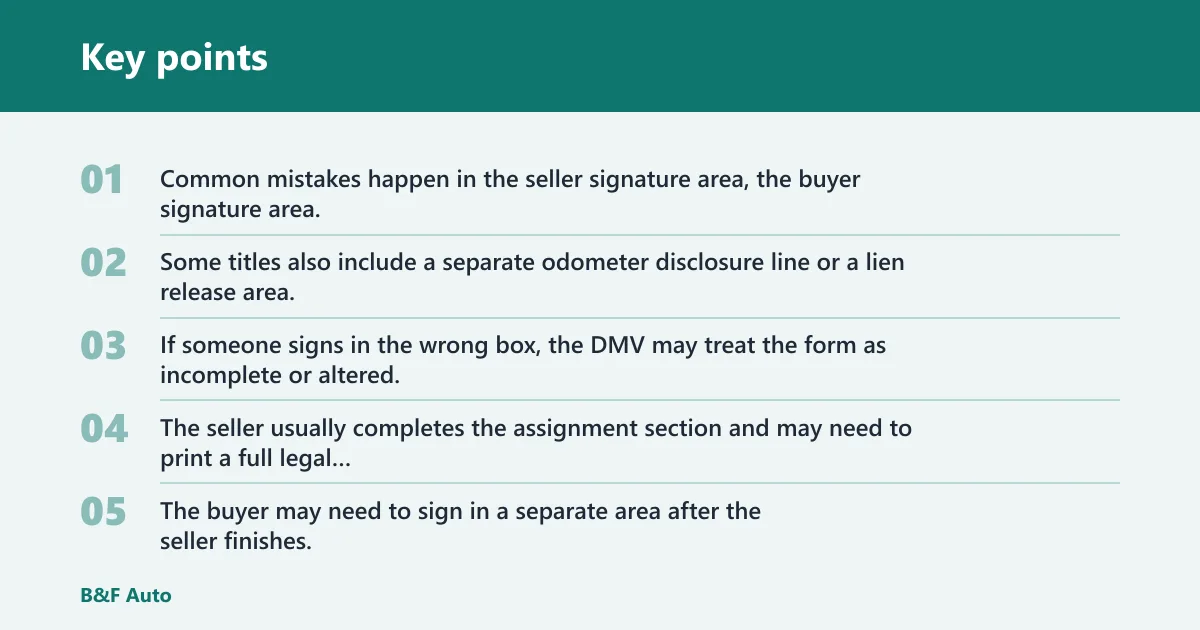
Common mistakes happen in the seller signature area, the buyer signature area, and the notary acknowledgment block. Some titles also include a separate odometer disclosure line or a lien release area. If someone signs in the wrong box, the DMV may treat the form as incomplete or altered.
Seller and buyer lines do different jobs. The seller usually completes the assignment section and may need to print a full legal name exactly as the title instructions require. The buyer may need to sign in a separate area after the seller finishes. If the wrong person signs the wrong line, the transfer can stall.
Why placement matters for transfer approval
Placement matters because title transfer rules change by state. A DMV may accept one corrected title error and reject another, even if both look minor. When a title has a misplaced signature, the office may see an altered document rather than a valid transfer record. That can stop registration, tax processing, or lien updates.
Wrong-spot title signature fix finder
| Mistake type | Likely DMV outcome | Correction possible? | Duplicate title needed? | Next action |
|---|---|---|---|---|
| Seller signature in the wrong box | Often rejected if it changes the assignment section | Maybe, if the seller still has the title and the state allows a correction form | Sometimes | Stop, review your state DMV title correction page, and contact the DMV or title office before anyone adds more writing |
| Buyer signature in the wrong box | May be rejected as an incomplete transfer | Sometimes, if the buyer has not overwritten required fields | Usually not for a simple buyer-side correction, unless the title is otherwise unusable | Ask whether the buyer can sign the correct line or whether the office wants a corrected title package |
| Notary acknowledgment in the wrong place | Common rejection in states that require notarization exactly where directed | Rarely on the same title once the acknowledgment is misplaced | Often yes | Confirm whether the notary may reacknowledge on a replacement title or whether a duplicate is required |
| Cross-outs or white-out | High risk of rejection | Sometimes for a minor clerical correction, but many states disallow it on signed titles | Often yes | Do not add more edits; ask the DMV if the title must be replaced |
Say your seller signs one line too high and also dates the title in the correct spot. If the title has not left the seller yet, some states may allow a correction form or a replacement title. If the title already went to the buyer, the same mistake may force a duplicate title.
Can you still transfer the title?
Maybe, but only if the DMV accepts the mistake under local rules and the title still matches the transfer instructions closely enough. A wrong-line signature does not automatically void every title. The deciding factors are the state, the section that was signed, and whether the document has already been handed over.
When the DMV may still accept it
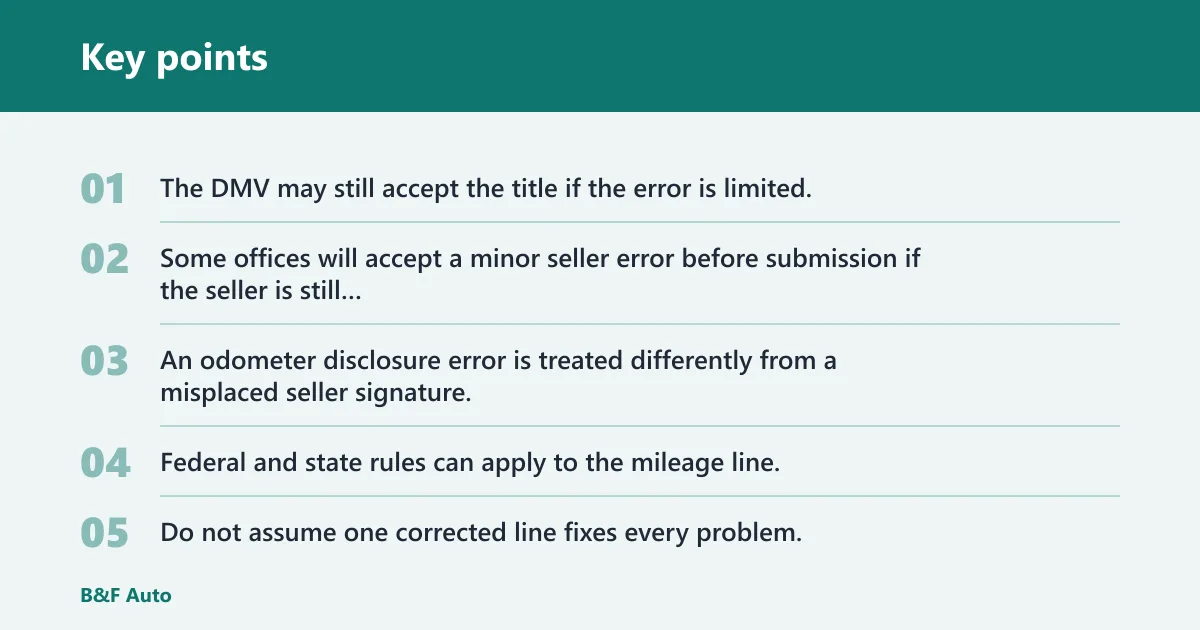
The DMV may still accept the title if the error is limited, the wrong signature did not cover other required fields, and the state allows a title correction form. Some offices will accept a minor seller error before submission if the seller is still available to fix it in the proper section.
An odometer disclosure error is treated differently from a misplaced seller signature. Federal and state rules can apply to the mileage line, so a wrong odometer entry may cause a separate rejection even if the ownership signatures look fine. Do not assume one corrected line fixes every problem.
When rejection is likely
Rejection is likely when the wrong signature alters the assignment section, the notary block is incomplete, or a title has obvious erasures, cross-outs, or white-out. Rejection is also likely when the buyer signed before the seller finished, or when the document no longer matches the state’s transfer sequence.
Picture a title with the seller’s name signed in the odometer disclosure line and the actual mileage left blank. That usually creates two problems at once: a misplaced signature and a missing disclosure. A DMV may reject the transfer and ask for a duplicate or corrected title, depending on state procedure.
What changes if the title already left the seller?
Once the title leaves the seller’s hands, fixing it gets harder. Before handoff, a seller can sometimes replace the document, complete a correction form, or sign in the proper section. After handoff or mailing, many states may require a duplicate title or a fresh transfer package.
Before handoff or mailing
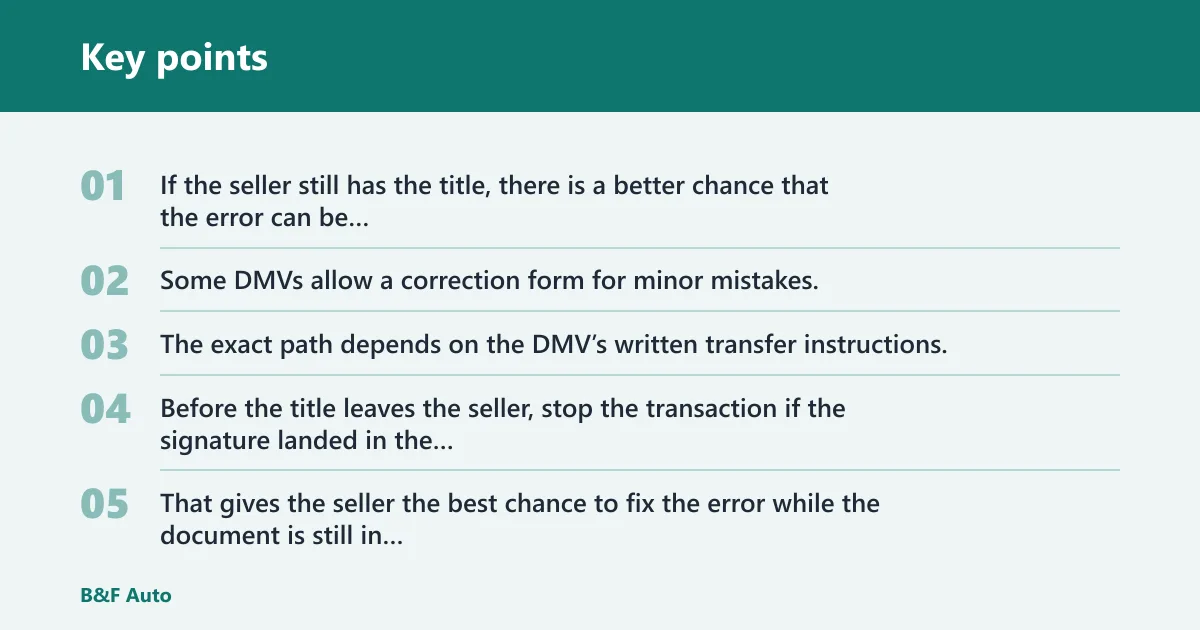
If the seller still has the title, there is a better chance that the error can be corrected without restarting everything. Some DMVs allow a correction form for minor mistakes, while others require the seller to apply for a duplicate title first. The exact path depends on the DMV’s written transfer instructions.
Before the title leaves the seller, stop the transaction if the signature landed in the wrong box. That gives the seller the best chance to fix the error while the document is still in the right hands. Once mailed, the risk of rejection and delay rises fast.
After handoff or mailing
After the title has been handed over or mailed, the buyer may no longer be able to fix the document in place. Some states will not accept a handwritten correction from the buyer because the seller’s signature section is already complete. In that situation, a duplicate title is often the cleaner path.
A common first-timer mistake is mailing a signed title and then noticing the notary stamped the wrong area. At that point, the safest move is usually to contact the DMV or title office immediately and ask whether a replacement title is required. Do not add more marks to the original unless the office tells you to.
Do you need a duplicate title?
You may need a duplicate title when the original is unusable because of a fatal signing error or an altered page. A correction form can sometimes fix a small mistake, but it is not reliable for every state or every error. When the title is no longer acceptable, a duplicate is the safer path.
When a correction form may work
A title correction form may work for a minor mistake, such as a small clerical error, if your state allows it and the title office accepts supporting documents. Some jurisdictions use a correction form for name fixes, address errors, or limited transfer mistakes. Others reject corrections on already signed transfer documents.
- Check whether the error is limited to one field.
- Confirm that your state accepts title correction forms for transfer mistakes.
- Gather any supporting documents the DMV asks for.
- Submit the correction only if the office says the original title is still usable.
When a duplicate title is the safer path
A duplicate title is usually safer when the mistake is in a core transfer area, when white-out or cross-outs were used, or when the document has already moved to the buyer. It may also be required if the notary placement is wrong and the state will not let the same title be repaired.
Do not guess here. A duplicate title process through the DMV, county clerk, or title office may be slower, but it can prevent a rejected transfer and a second round of fees. If the original is considered unusable, replacement is often the only clean option.
Who can fix the mistake?
Usually, only the person whose signature belongs in that section can fix the mistake, and only if the state allows a correction. The seller should handle seller-side errors. The buyer should handle buyer-side errors. No one should alter another person’s completed signature without clear DMV direction.
Seller corrections
If the seller signed the wrong spot, the seller may be able to correct it before the title leaves their hands. In some states, that means completing a replacement title or a correction form. In others, the seller must apply for a duplicate title and start the transfer again.
The seller signature must match the title instructions exactly. That can mean a full legal name, a signature in the assignment section only, or a separate date line. If the seller adds marks in the wrong section, the DMV may treat the page as altered.
Buyer corrections
If the buyer signed the wrong line, the buyer may be able to sign the correct line if the wrong mark did not damage the seller’s required section. But the buyer should not overwrite seller fields or try to “fix” a transfer that the state already treats as completed. Ask the DMV before adding anything else.
When no one should alter the title
No one should cross out, erase, or cover a completed signature unless the state office gives direct permission. That includes white-out, heavy scribbling, and casual hand edits. Many DMVs reject those titles immediately because the document no longer shows a clean chain of ownership.
How to avoid another title error
Check every field before anyone signs. The safest habit is to read the title instructions, confirm the assignment section, and verify the odometer and notarization lines before the pen comes out. A few minutes of review can prevent a rejected transfer and a duplicate-title runaround.
Check the assignment section first
Start with the assignment section because that is where seller errors often begin. Confirm who signs, where the signature goes, and whether a printed name or date is also required. If the state calls for the seller’s full legal name, do not shorten it.
Verify odometer and notarization lines
Then check the odometer disclosure section and the notary acknowledgment block. The odometer entry must be accurate, and the notary must sign and stamp only where the title directs. If your state requires notarization, a misplaced stamp can stop the transfer even when the signatures are otherwise correct.
Confirm state instructions before signing
Every state has different acceptance rules for title correction procedures, duplicate title requests, and transfer submission requirements. Before anyone signs, review the state DMV title instructions online or call the county clerk or title office named on the title form. That step is faster than fixing a rejected title after the fact.
Frequently asked questions
What happens if you signed the car title in the wrong spot?
A wrong-spot signature can delay the transfer, trigger a DMV rejection, or force you to request a corrected or duplicate title. Whether it can be fixed depends on the state, the section that was signed, and whether the title has already been handed over or mailed.
Can you still transfer a title if you signed the wrong line?
Sometimes, but only if the DMV accepts the error under local rules. Minor mistakes may be corrected before submission in some states. If the wrong line changes the assignment, notarization, or odometer section, the office may reject the title and require a replacement.
Do you need a duplicate title if you signed the wrong place?
You may need a duplicate title if the original is no longer acceptable because of a serious signing error. A correction form can work for minor issues in some states, but not for every mistake. If the title has already left the seller’s hands, a duplicate is often the safer route.
Can white-out or cross-outs void a signed the car title?
Yes. White-out, erasures, and visible cross-outs often make a title look altered, and many DMVs reject altered documents. Some states allow limited corrections, but you should not use them unless the title office tells you that the specific change is allowed.
What should you do if the seller signed the title in the wrong spot?
Stop the transfer and contact the DMV or title office right away. If the seller still has the title, a correction or duplicate may be possible. If the title has already been delivered, the state may require a new title application or a replacement document.
Will the DMV reject a title signed in the wrong place?
Often, yes. DMV acceptance depends on the state and the section involved, but the wrong place is a common rejection reason. A seller signature in the wrong box, a misplaced notary stamp, or a damaged odometer line can all stop registration until the paperwork is fixed.