What Paperwork Do You Need to Trade in a Car?
Bring the car title if you own it, your lender account info if there’s a loan, and a valid ID. If the title is missing, names do not match, or the car is financed, the dealership usually cannot finish the trade without extra steps. Delays can hold up the deal, delay payoff, or lower your trade value. This guide lays out the exact paperwork to bring, what is required versus optional, and what changes for paid-off, financed, jointly owned, and out-of-state titles.
Trade-in paperwork checklist
Start with the documents that transfer ownership, then add the items that help the dealer verify identity, payoff status, and vehicle condition. A trade-in can be part of a used-car purchase and depends on whether you finance or trade in a vehicle, so the stack changes a little from one deal to the next.
The clean split is simple: title and transfer documents prove the dealer can take the vehicle, while service records, keys, and manuals can support appraisal or speed the handoff. A signed receipt alone does not complete a title transfer.
| Document | Who provides it | When it is mandatory | What can go wrong if it is missing |
|---|---|---|---|
| Vehicle title | Owner or lienholder, depending on payoff status | Always when the dealer must legally take ownership | The dealer may not be able to complete the transfer, and the trade can stall |
| Current registration card | Owner | Commonly requested to confirm VIN and owner name | Record mismatches can slow verification or raise questions about the vehicle |
| Driver’s license or acceptable ID | Owner or signer | When the dealer needs identity verification and a legal name match | The dealership may not be able to process the trade or sign the paperwork |
| Proof of insurance | Insurer or policyholder | When the dealer or lender wants evidence of current coverage before you leave | You may not be able to drive the replacement vehicle off the lot |
| Payoff statement | Lender | For financed vehicles with a lien | The dealer may not know the exact payoff amount, which can delay closing |
| Odometer disclosure | Seller, and sometimes buyer as part of the form process | When mileage disclosure is required for the transaction | Incorrect mileage entries can create a paperwork problem at transfer |
| Trade-in appraisal sheet | Dealer | Not required for ownership transfer, but common in the deal file | You lose a clear record of valuation notes and negotiation points |
| Bill of sale | Dealer and seller | Supporting document, not a substitute for title transfer | It may document the deal, but it does not replace a transferable title |
| Service records | Owner | Optional in most trade-ins | You may leave value on the table if the dealer cannot verify maintenance history |
| Owner’s manual and spare key | Owner | Optional, but useful at handoff | The dealer may see less complete handoff items and value the car less generously |
| Out-of-state title support documents | Owner, lender, or dealer depending on the state | When the title comes from another state and local transfer rules apply | Paperwork may need extra signatures, forms, or timing before the dealer can close |
Use this rule of thumb: bring the title, registration, ID, and insurance, then add any lender paper and records that help the dealer price the car or finish the sale. Car and Driver says to provide the title and registration, bring a valid driver’s license and proof of insurance, and gather loan information, including account number and payoff amount. (Caranddriver)
What the dealer needs to transfer ownership
The dealer needs paperwork that can legally move the vehicle from your name to the dealership or the next buyer. That starts with a transferable title, plus any required signatures, odometer disclosure, and payoff paperwork if a lien exists. In some states, the dealer may also need specific transfer forms or tax paperwork.
Vehicle registration is often part of the file because it helps confirm the VIN and owner name. That does not replace the title. It supports the transfer and helps the dealer verify the vehicle matches the records.
What only helps appraisal or approval
Service records, repair receipts, the owner’s manual, the spare key, and the trade-in appraisal sheet can help the appraisal process, but they do not transfer legal ownership by themselves. Car and Driver notes the dealer may ask for tax forms, pay stubs, or bank statements, which can affect financing approval on the new purchase rather than the trade itself.
Say your SUV has every oil change receipt in a folder, but the title is still in a lender’s name. The receipts may support value, yet the dealer still needs the payoff process handled before the trade can close.
What to bring from your wallet, lender, and insurer
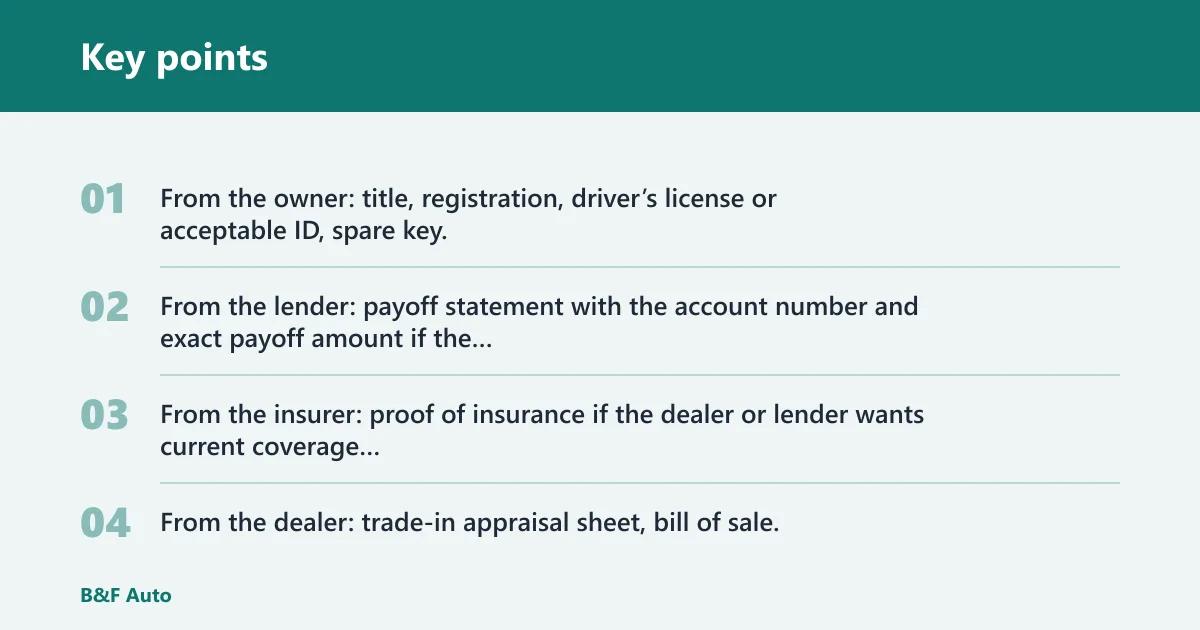
- From the owner: title, registration, driver’s license or acceptable ID, spare key, and any service records.
- From the lender: payoff statement with the account number and exact payoff amount if the car has a lien.
- From the insurer: proof of insurance if the dealer or lender wants current coverage before you leave.
- From the dealer: trade-in appraisal sheet, bill of sale, and any transfer forms they prepare for you to sign.
Do you need the title to trade in your car?
If you own the car outright, the title is usually the main ownership document, and the dealership typically needs it to complete the trade. A signed receipt alone does not complete a title transfer. If a lender still holds the lien, the title may be with the lender and extra payoff steps are needed.
Paid-off vehicles
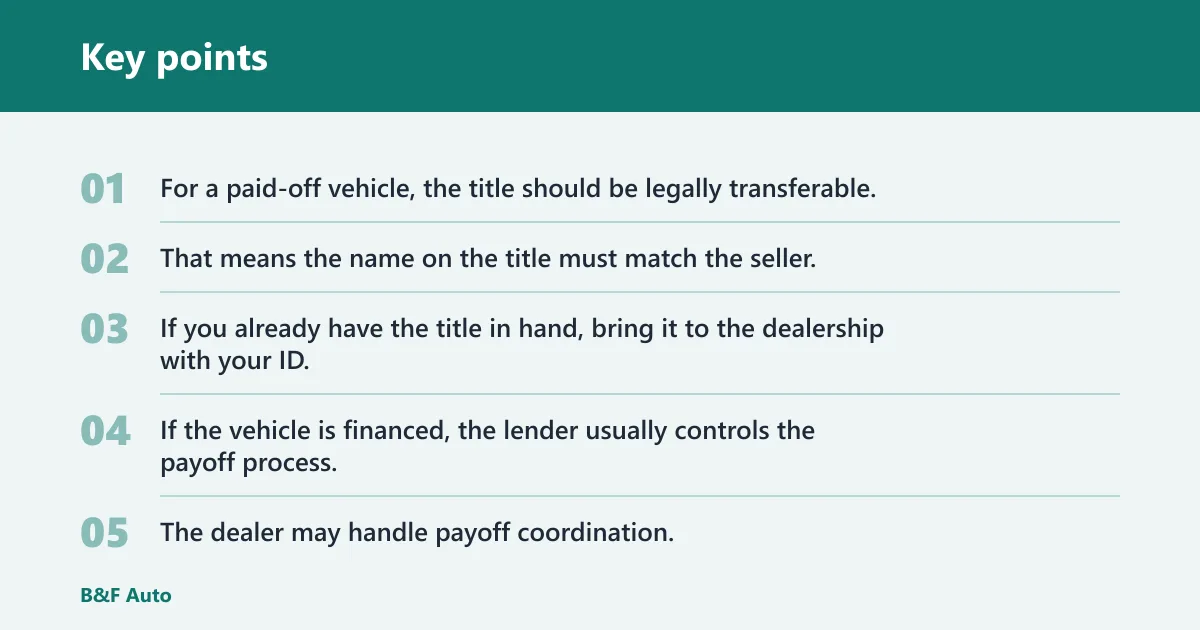
For a paid-off vehicle, the title should be legally transferable. That means the name on the title must match the seller, and any assignment or release section must be completed the way your state requires. If you already have the title in hand, bring it to the dealership with your ID.
Vehicles with a lien
If the vehicle is financed, the lender usually controls the payoff process, and trade-in ownership and payoff records may be needed when a lien exists. The dealer may handle payoff coordination, but it still needs the exact loan information and the current payoff figure before the deal can close.
Missing title or title held by a lender
If the title is missing, damaged, or still held by a lender, the trade can slow down quickly. Ask the lender for the correct payoff package or replacement instructions before the appointment, and ask the dealer whether they can wait for the title to arrive or need a different form of transfer.
A common first-timer mistake is assuming a handwritten bill of sale can stand in for the title. It cannot. The bill of sale supports the transaction, but it does not replace a proper title transfer.
What paperwork do you need if the car is financed?
For a financed trade-in, you need the loan details that let the dealer close the lien cleanly: the lender name, account number, and exact payoff amount. The dealer can apply the trade-in credit to the new car purchase, but it needs accurate payoff numbers first so the old loan and the new deal line up. (Caranddriver)
Payoff statement details to request
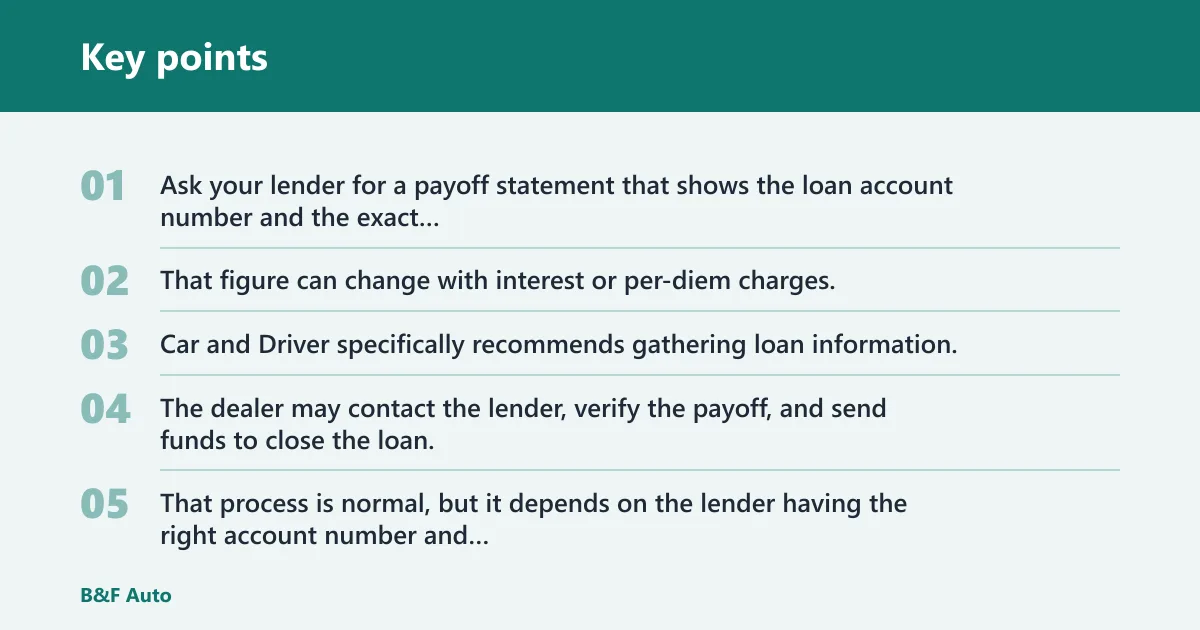
Ask your lender for a payoff statement that shows the loan account number and the exact payoff amount. That figure can change with interest or per-diem charges, so an old balance from a billing app is not enough. Car and Driver specifically recommends gathering loan information, including account number and payoff amount.
How the dealer handles the lien
The dealer may contact the lender, verify the payoff, and send funds to close the loan. That process is normal, but it depends on the lender having the right account number and the payoff figure being current. If those details are wrong, the closing can be delayed.
Why the exact payoff amount matters
The exact payoff amount tells the dealer how much must be sent to satisfy the lien. If the number is too low, the lender may not release the title. If it is too high, the deal may show a different equity number than you expected. That is why a fresh statement matters.
Picture a sedan with a loan balance that looks close to the trade offer, but the lender’s payoff includes one more week of interest. The dealer can still process the trade, but only if it has the current payoff amount before final numbers are printed.
What paperwork do you need if the car is jointly owned?
Joint ownership usually means the title and the signatures must match the way the car is titled. If both names are on the title, both owners may need to sign. If only one name is listed, the title paperwork has to follow the exact legal ownership structure in your state.
Matching names on the title and ID
The name on the title should match the name on the transaction records, and the same is true for the ID used at the dealership. Small differences can create a snag, especially if one record uses a middle initial and another uses a full middle name. The dealer may ask for extra proof if the names do not line up.
When both owners must sign
Many dealerships require both owners to sign when both names appear on the title. That protects the transfer from later disputes. If one owner cannot be present, ask the dealer whether a notarized signature, power of attorney, or other state-approved document is allowed before the appointment.
How to handle a spouse, co-borrower, or co-owner
If the car belongs to a spouse or co-owner, bring the paperwork that shows both legal names and the correct ownership status. A co-borrower on the loan is not always the same as a co-owner on the title, so do not assume the financing paperwork is enough for the transfer.
Do you need registration, ID, and insurance?
Yes, bring all three unless the dealer tells you otherwise. Registration helps verify the car, ID confirms who is signing, and insurance may be needed before you drive away in the replacement vehicle. Car and Driver advises bringing a valid driver’s license and proof of insurance, along with the title and registration.
Registration card and VIN match
The current registration card can help the dealer verify the VIN and owner name. If the VIN on the registration does not match the car, or the owner name is different from the title, the dealer may need more documents before it can finalize the trade.
Driver’s license or acceptable alternate ID
Bring your driver’s license if you have one. If you do not, bring another acceptable form of ID that the dealer can use for identity verification. The legal name on the ID should match the name used on the trade paperwork, or the dealership may need extra steps to verify your identity.
Proof of insurance before you leave
Proof of insurance is often needed before you leave in the new vehicle, and some lenders or dealers may ask for it earlier. Coverage rules can vary by dealership and by state, so confirm what the store wants before your appointment. Do not assume the old policy or old vehicle card is enough.
What documents can raise your trade-in value?
These items do not transfer ownership, but they can help the dealer understand the car’s condition and history. Service records are the clearest example. Auto Express says service history is not essential, but it helps. The same idea applies to spare keys and the owner’s manual.
Service records and repair receipts
Bring oil-change records, brake receipts, tire invoices, and repair paperwork if you have them. They can support the condition story the car tells in the parking lot. They do not replace title documents, and they are usually not mandatory, but they can help the dealer feel more confident about the vehicle’s upkeep.
Owner’s manual and spare key
A spare key and owner’s manual are helpful handoff items. They are not legal ownership documents. If you have both, bring them. Missing a spare key may not stop the trade, but it can affect what the dealer thinks the car is worth.
Trade-in appraisal sheet and bill of sale
The trade-in appraisal sheet is the dealer’s valuation record. It usually lists condition notes, options, and the number used in negotiation. The bill of sale is a supporting document that records the transaction, but it does not replace the title transfer.
Suppose a compact car has full maintenance records, one factory key, and a clean title. The records can help the appraisal, while the title and ID are what let the dealer legally finish the trade.
What to ask the dealer before you sign
Ask what forms the dealership will complete, how it wants the title signed, and whether it needs anything beyond the standard trade paperwork. Title-transfer rules vary by state, so the dealer should confirm local requirements before the appointment. That check can save you a return trip.
Which forms will the dealer complete?
Ask whether the dealer handles the title assignment, odometer disclosure, lien payoff paperwork, and state transfer forms. Some stores do more of the paperwork for you, while others need you to sign specific sections in a specific order. Know that before you sit down.
How the title transfer is handled
Confirm whether the dealer needs the title in hand, whether it can accept a lender-held title, and whether both owners must be present. If the title is out of state, ask about extra forms or timing. The wrong assumption here is a common reason a trade-in gets pushed back.
What to verify on the final numbers
Check the trade-in value, payoff amount, dealer credit, and any tax or fee lines before you sign. The numbers should match the paperwork you brought. If the title, payoff, or owner name does not line up, stop and fix it before the deal is final.
Frequently asked questions
What paperwork do I need to trade in a car?
Bring the title, registration, a valid ID, and proof of insurance if the dealer or lender asks for it. If the car has a loan, bring the payoff statement with the account number and exact payoff amount. Service records, keys, and manuals can help, but they are usually optional.
Do I need the title to trade in my car?
Yes, if you own the car outright, the title is the main document that lets the dealer legally take ownership. A receipt or bill of sale does not replace it. If the title is held by a lender, the dealership will need payoff steps before the trade can close.
Do I need registration when I trade in my car?
Registration is commonly requested because it helps verify the VIN and owner name. It is not the same as the title, but it supports the transfer and can help the dealer confirm the vehicle records. Bring the current registration card if you have it.
Do I need proof of insurance to trade in my car?
Often yes, especially if you are driving away in another vehicle after the trade. Some dealers and lenders want current proof of insurance before they release the replacement car. Ask the dealership ahead of time, because insurance requirements can vary by store and state.
What if I still owe money on my trade-in?
Bring the lender information and a current payoff statement. The dealer needs the exact payoff amount, not just the loan balance shown on a monthly statement. The store may pay the lender directly and apply the trade-in credit to the new purchase after the lien is satisfied.
What documents should I ask the dealer for before I trade in my car?
Ask for the trade-in appraisal sheet, the final purchase agreement, and any title or payoff forms the dealership will complete. You should also ask how the title transfer is handled and what the dealer needs from your lender or insurer. That keeps the closing process clear.