What Red Flags Should Make You Walk Away From a Used Car?
Walk away immediately from a used car with title problems, airbag or frame damage, flood evidence, odometer mismatch, or a seller who won’t verify records; minor wear belongs in inspection or negotiation. Skipping those checks can leave you with a car that is unsafe, uninsurable, or worth far less than the asking price. This guide sorts red flags into inspect, renegotiate, or walk away immediately so you know what to do next.
Red flag decision matrix
Do not treat every bad sign the same. Some clues mean you should leave before a test drive. Others call for a mechanic, a scanner, or a lift inspection before you decide. A few belong in price talk only, usually because they point to wear or routine repairs instead of hidden damage.
| Clue | Why it matters | How to verify on-site | Automatic walk-away? | Next tool or inspection | Likely hidden-cost range |
|---|---|---|---|---|---|
| Flood smell, silt, or corrosion | Water can reach electronics with only a foot or two of water, and flood damage often leads to later electrical failures. | Check for musty odor, silt in the spare-tire well, rust or green residue on connectors, and damp trim edges. | Yes, in many buyer guides | Independent mechanic, underbody check, connector inspection | Very high; wiring and module repairs can run far above cosmetic cleanup |
| Salvage, rebuilt, flood, no title, or VIN mismatch | Branded titles and bad paperwork can affect safety, financing, insurance, and resale. A VIN that does not match across documents is a stop sign. | Compare the VIN on the dash, door label, title, registration, and listing photos. | Yes | Title report, state record check | High; resale loss and registration problems can follow the car |
| Uneven panel gaps, crooked panels, overspray | These can point to collision repair or frame trouble. Structural repair can affect crash protection and tire wear. | Stand back, compare both sides, and inspect hood, doors, and trunk lines in daylight. | Sometimes | Frame measurement, lift inspection, alignment check | Moderate to very high, depending on structural damage |
| Odometer mismatch clues | Wear that does not fit mileage can mean rollback, swapped parts, or bad records. | Look for steering wheel shine, pedal wear, seat bolster collapse, and service-history contradictions. | Usually yes if the mismatch is clear | History report, service records, scan data | High if the mileage cannot be trusted |
| Warning lights that stay on or do not light at startup | Stuck-on lights can mean active faults. Missing bulbs can hide faults. | Turn the key on; lights should illuminate briefly, then go out. | Often yes for safety or emissions lights | OBD-II scan | Low to high, depending on the code and cause |
| Seller refusal, no VIN, pressure tactics | Refusal to verify records can hide major problems or a scam. | Ask for the VIN, inspection time, and a direct phone number. | Yes in most private sales | None; stop if the seller will not cooperate | High; the deal itself may be unsafe |
| Slipping transmission, burnt smell, rough shifts | These point to expensive drivetrain trouble and possible overheating. | Note delayed engagement, flare, shudder, and burnt fluid odor. | Often yes | Road test, fluid check, mechanic diagnosis | High to very high |
| Uneven tire wear, thin tread, mixed tire brands | These may mean alignment issues, suspension wear, or neglected maintenance. | Check tread across both shoulders and compare all four tires. | No, unless paired with frame or alignment clues | Alignment check, lift inspection | Low to moderate |
| Minor cosmetic wear | Scuffs, chips, and a worn seat cover often support negotiation rather than rejection. | Confirm the wear matches age and mileage. | No | Price comparison, simple inspection | Low |
What should make you walk away immediately?
Walk away when the car shows flood evidence, title fraud, VIN mismatch, clear odometer tampering, or major structural or drivetrain risk. These are not small bargaining points. They can make the car unsafe, hard to insure, or far more expensive than the asking price once repairs and paperwork problems land.
Flood damage signs that end the deal
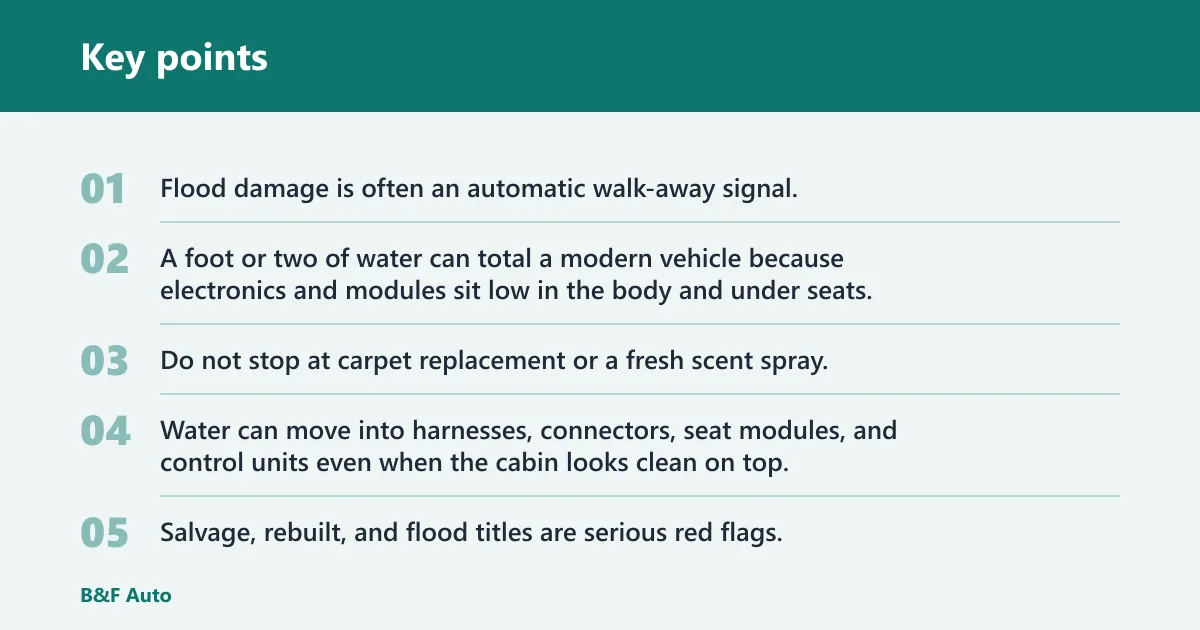
Flood damage is often an automatic walk-away signal. Signs include a musty smell, water lines, silt in the spare-tire well, rust, and green residue or white powder on electrical connectors. A foot or two of water can total a modern vehicle because electronics and modules sit low in the body and under seats.
Do not stop at carpet replacement or a fresh scent spray. Water can move into harnesses, connectors, seat modules, and control units even when the cabin looks clean on top. ClarityCheck also notes that a torn-down or steam-cleaned engine can hide a leak, and the same cleanup can hide flood marks.
Title and VIN problems that stop the sale
Salvage, rebuilt, and flood titles are serious red flags. A no-title car is worse. If the VIN does not match across the dash, door sticker, title, registration, and listing, stop there. Title washing across state lines can hide a branded history for a while, but the paperwork trail usually breaks if you compare documents carefully.
CarBluff also treats a seller without a VIN as someone asking you to buy blindly. If the seller asks for payment before you have seen the car, that ends the deal. So does a shipping or deployment story that substitutes for a live inspection.
Transmission or frame clues that point to major risk
Serious structural repair, crooked panels, and uneven panel gaps can point to frame damage. ClarityCheck says uneven panel gaps can indicate collision repair or frame trouble. That matters because structure affects crash performance, tire wear, and alignment, not just appearance.
Transmission problems can be just as serious. Slipping, burnt-smelling fluid, rough or delayed shifts, and overheating signals can mean expensive internal wear. If the car hesitates hard when shifting into drive, shudders under light throttle, or smells burnt after a short drive, leave unless a mechanic can explain the fault clearly.
What warning lights are serious enough to avoid buying?
Warning lights are serious when they stay on, come on in a pattern that suggests a fault, or should have illuminated and did not. At startup, the lights should come on briefly, then go out. If the check-engine light stays on, never appears, or looks tampered with, that is a strong reason to stop and verify with a scan.
Startup light behavior and missing bulb clues
Turn the key to the on position before the engine starts. Most warning lamps should illuminate for a bulb check and then go out after startup. If one is missing, taped over, or suspiciously dim, the seller may be hiding a fault. A missing bulb can also mask an emissions issue that would show up on a scanner.
Do not assume a clear dash means a clean car. Some codes clear temporarily, and some sellers reset the light right before a viewing. That can hide a problem until the next drive cycle.
What an OBD-II scan can confirm
An OBD-II scan can help check whether the check-engine light has stored codes, pending codes, or readiness issues. It can also show whether the light was recently cleared. That does not replace a test drive, but it helps separate a minor sensor fault from a deeper engine, emissions, or transmission problem.
- Key on, then watch the dash. Confirm that warning lights illuminate briefly and then go out after start. If the pattern is wrong, note which light stayed on or never appeared.
- Scan for stored codes. Use an OBD-II scanner before making an offer. A clean dash with stored codes or incomplete readiness monitors can mean the problem was recently erased, not fixed.
- Match codes to symptoms. If the scan points to transmission, emissions, or misfire faults, weigh the repair cost against the asking price and your risk tolerance.
How do you spot hidden flood damage?
Hidden flood damage often shows up in smell, residue, and electrical behavior long before a seller admits anything. A musty cabin, damp carpet under the mats, rust on seat hardware, and corrosion on connectors are all warning signs. If several of these show together, the car belongs in the walk-away bucket.
Smell, residue, and corrosion clues
Check the cabin with the doors closed, then open them and smell again. A strong musty odor after a detailed cleaning can be a warning sign. Lift floor mats, check the spare-tire well, and inspect lower seat rails, metal fasteners, and connector housings for rust or green residue.
Look under the carpet edges if the seller allows it. Silt in the trunk or spare-tire well is especially telling, because it tends to settle in low spots and is easy to miss when the top layer has been cleaned.
Say your sedan smells normal at the curb, but the spare-tire well has a thin layer of mud-colored grit and the rear-seat connectors show green residue. That combination is enough to stop the deal, even if the paint and tires look tidy.
Electrical faults that often show up later
Flooded cars can develop odd electrical behavior after the first few drives, such as slow windows, intermittent locks, twitching mirrors, or failing seat motors. Windows may move slowly, locks may cycle on their own, mirrors may twitch, and seat motors may fail intermittently. Those symptoms point to water intrusion or corrosion in harnesses and modules, which can turn into recurring repair bills.
Suppose the radio works, but one power window fails only when it rains and the seat memory resets after every start. That pattern is more than an annoyance. It often means moisture has reached a connector or module, and those faults can be hard to trace once the car is sold.
Can frame damage ever be worth buying?
Minor cosmetic repair may be worth negotiating, but structural damage is different. Frame damage can affect crash protection, alignment, and tire wear, so it is not a casual discount item. If the seller cannot document the repair with clear records and a proper inspection, walk away.
Body clues that suggest structural repair
Uneven panel gaps, crooked panels, overspray, replaced glass, and hardware that looks freshly disturbed can point to collision repair. The same source notes that uneven panel gaps can indicate collision repair or frame trouble. If the trunk lid sits high on one side or the hood line changes from one corner to the next, the car needs a closer look.
Do the inspection outdoors in daylight, not at night. That makes it easier to spot mismatched reflections, paint texture changes, and gap differences that show up only when the light is even.
Alignment, tire wear, and safety implications
Frame or suspension damage often shows up in tire wear before it shows up in paperwork. Feathered tread, one shoulder worn faster than the other, or a steering wheel that sits off-center can mean the chassis is not square. That can also shorten tire life after the sale.
Before you decide, compare all four tires. If two brands are different and the wear pattern is uneven, the car may have had a repair or an alignment problem. That does not always mean immediate rejection, but it does mean you need a lift inspection and a hard price cap.
When can a pre-purchase inspection save the deal?

A pre-purchase inspection can save a borderline car when the red flags point to wear, not hidden damage. It is most useful when the title is clean, the seller cooperates, and the issues look like brakes, tires, leaks, or mild electrical faults. It is not a rescue tool for obvious flood, title, or VIN problems.
What an independent mechanic should check
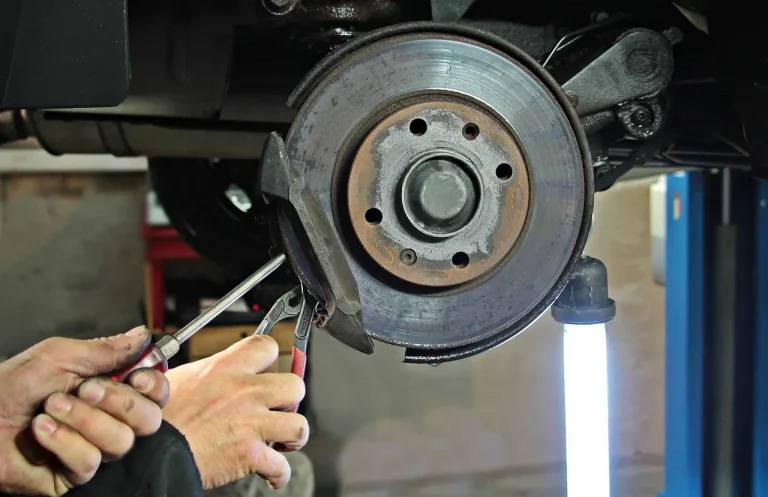
An independent mechanic should inspect the car on a lift, scan it for codes, and check for leaks, corrosion, suspension wear, brake thickness, and underbody damage. The lift matters because some signs hide below eye level. A diagnostic scan matters because it can reveal stored faults that the dash does not show.
That inspection usually costs far less than a hidden repair bill after purchase. It also gives you evidence for negotiation if the car has worn tires, low brake life, or an isolated sensor fault that does not threaten the whole deal.
When inspection is worth the cost
Choose inspection over walking away when the seller is cooperative and the red flags are limited to maintenance items or mild wear. A tire set near the minimum tread concern, brake wear, or a single warning light that may be a sensor issue can be worth a mechanic’s time. If the seller refuses the inspection, that refusal itself is a dealbreaker under many buyer guides.
CarBluff says any payment requested before seeing the car ends the deal, and a seller refusing a pre-purchase inspection is listed as a dealbreaker. Those are not small etiquette issues. They are risk signals.
- Book the inspection first. If the car is otherwise promising, arrange an independent mechanic, a scan, and a lift check before you negotiate further.
- Set a repair threshold. Decide in advance what you can tolerate, such as tires, brakes, or one sensor. If the estimate goes beyond that, walk away.
- Use findings to decide. A clean inspection supports your offer. A structural, flood, or transmission finding ends the deal.
What red flags should I check before making an offer on a used car?
Before you offer, check the VIN, title status, dash lights, panel fit, tire wear, fluids, and the seller’s behavior. That short list catches most serious problems before you spend time on a test drive or inspection. It also helps you sort clean cars from ones that need a mechanic right away.
- Verify the VIN first. Match the dash VIN to the title, registration, and listing photos. A mismatch or missing VIN is a hard stop.
- Inspect in daylight. Look for uneven panel gaps, crooked panels, overspray, and obvious body repair. Daylight makes the differences easier to spot.
- Check fluids and smells. Look for burnt fluid, fresh cleanup over a leak, musty odor, and silt in low spots. These clues matter most when they appear together.
- Watch the startup cycle. Confirm that warning lights come on briefly and then go out. Scan for codes if anything stays on or looks disabled.
- Judge the seller’s conduct. If the seller will not share the VIN, refuses inspection, presses for fast payment, or pushes off-platform communication, walk away.
Brakes, tires, and minor cosmetic wear often belong in negotiation, not rejection. Mixed tire brands, shallow tread, or worn pads can support a lower offer if the rest of the car is clean. The key is whether the evidence points to ordinary maintenance or to deeper damage.
Frequently asked questions
What used car red flags mean I should walk away immediately?
Walk away immediately for flood damage, title brands such as salvage, rebuilt, or flood, VIN mismatch, odometer mismatch, clear frame damage, serious transmission symptoms, or a seller who will not verify records. Those problems can affect safety, insurance, resale value, or both. Minor wear belongs in inspection or negotiation instead.
Is flood damage always a dealbreaker on a used car?
In many buyer guides, yes. Flood damage is often treated as an automatic walk-away because water can reach electronics with only a foot or two of water, and the repair path is unpredictable. Musty smell, silt, corrosion, and electrical oddities make the risk even higher. A clean title does not erase those clues.
Should I walk away if the car has a salvage or rebuilt title?
Usually, yes unless the price is extremely low and you have a strong reason to proceed. Salvage, rebuilt, and flood titles are serious because they can affect financing, insurance, and resale. Also check for title washing and VIN mismatches, which can hide the car’s real history across state lines.
What seller behavior is a red flag when buying a used car privately?
Refusing to give the VIN, refusing a pre-purchase inspection, asking for payment before you see the car, pushing you to move fast, or steering you off-platform are all bad signs. CarBluff also flags shipping or deployment stories as dealbreakers. Private-sale caution should rise, not fall, when the story sounds urgent.
Can a used car with frame damage ever be worth buying?
Sometimes, but only with proof of proper repair and a price that reflects the risk. Frame damage can affect crash safety, alignment, and tire wear. If the seller cannot document the repair, or if the panel gaps and tire wear still look wrong, walking away is the safer call.