Can You Donate a Car That Does Not Run?
Yes, many charities will accept a car that does not run if you have clear ownership, the vehicle can be reached for towing, and the program accepts that condition. If any of those pieces are missing, pickup can be delayed and tax paperwork can get complicated. This guide explains eligibility, towing, title issues, donor receipts, and the main reasons a nonrunning car donation stalls.
When a nonrunning car is still eligible
Yes. A car that does not start, has major mechanical failure, or will not run at all can often still be donated. The key issue is not only engine function. It is whether the charity can accept the vehicle, tow it safely, and complete the transfer paperwork correctly.
That distinction matters. A car that “does not start” may only need a battery or starter. A car that “does not run” may have engine, transmission, fuel, or electrical trouble. Severe damage, missing parts, or title problems can change whether the vehicle is eligible and how it is picked up.
When a nonrunning car is usually still acceptable
Many vehicle donation programs accept cars, SUVs, and minivans whether they run or not. Some charities also accept other vehicle types, but acceptance depends on the program and the car’s condition. The most common baseline is simple: if the vehicle can be documented, reached, and removed safely, donation is often possible.
Charity vehicle-donation pages commonly note that towing is arranged at no cost and that the vehicle can be accepted running or not, but that the final decision depends on title status and pickup conditions. That is why the intake review matters as much as the mechanical condition.
When damage or missing parts can change the answer
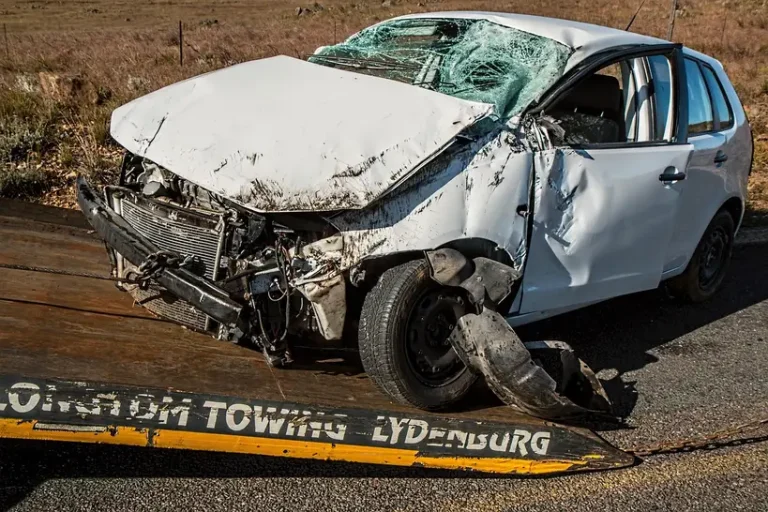
Missing wheels, locked steering, a seized drivetrain, or a missing title can turn a simple tow into a delayed pickup. The car may still be eligible, but the program may need more time, a different hauler, or additional paperwork before it can confirm collection.
For example, a sedan with a dead engine, aired-up tires, and a signed title is usually easier to process than one with two flat tires, no keys, and no title. The second car may still be possible to donate, but it is much more likely to be delayed during intake or pickup scheduling.
How nonrunning car pickup works
Pickup usually starts after an online form or intake call. The charity asks for the vehicle location, year, make, model, condition, and whether it runs. That information helps the program decide whether the car can be towed normally or needs special handling.
Intake details a charity will ask
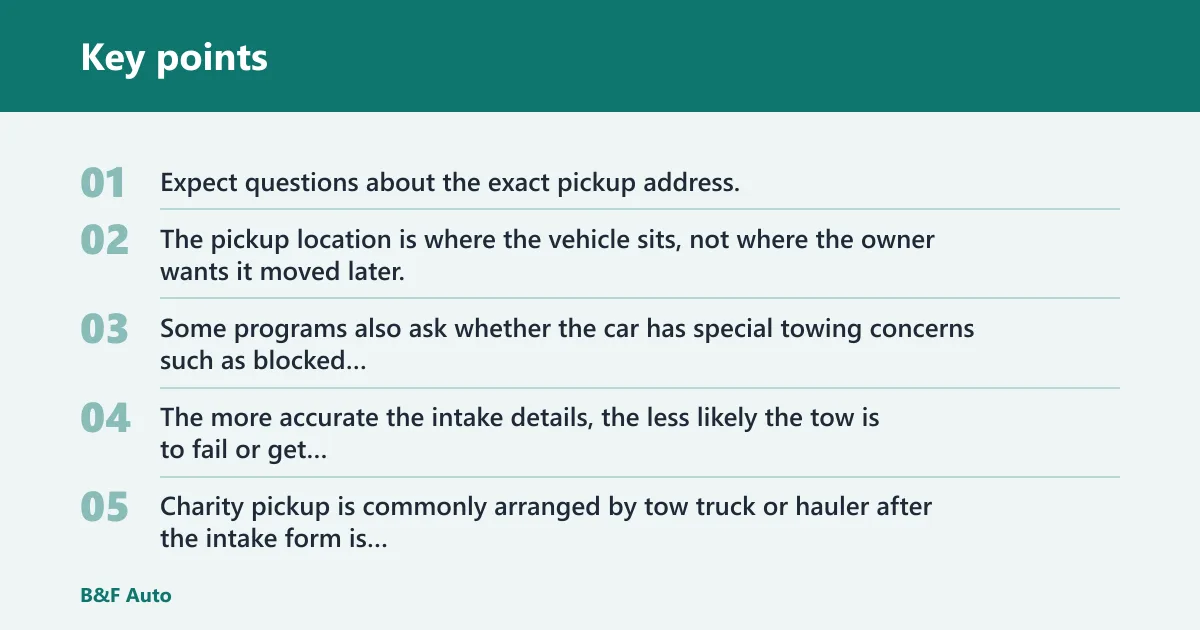
Expect questions about the exact pickup address, whether the vehicle is on private property or a street, whether the keys are available, and whether the title is ready. The pickup location is where the vehicle sits, not where the owner wants it moved later, so access and loading conditions matter from the start.
Some programs also ask whether the car has special towing concerns such as blocked access, missing wheels, or a narrow driveway. The more accurate the intake details, the less likely the tow is to fail or get rescheduled.
Tow truck or hauler pickup from the vehicle’s location
Charity pickup is commonly arranged by tow truck or hauler after the intake form is submitted. In many programs, the donor does not pay for towing. A reputable charity donation page will usually explain whether towing is free, how pickup is scheduled, and what title or access requirements apply.
Pickup happens where the car sits, so access matters. If the vehicle is behind a locked gate, parked nose-in against a wall, blocked by another car, or sitting on soft ground, the hauler may need extra time or may need the vehicle moved before collection.
Typical timing for scheduling and collection
Timing depends on program capacity and location. Many charities try to schedule pickup within a few business days, but that is not guaranteed. Rural locations, busy seasons, and access problems can slow the schedule even when the vehicle itself is eligible.
Once the program confirms the details, the vehicle is usually scheduled for collection from the place it is parked. If the tow truck cannot load it on the first attempt because of a flat tire, stuck wheel, or no keys, the pickup window can move out.
What can delay a pickup?

Pickup delays usually come from access, loading, or paperwork problems, not from the fact that the car does not run. A dead battery may be easy to work around. Missing title paperwork, seized wheels, or blocked access can stop the tow until the issue is fixed or the program approves a different setup.
Dead battery, flat tires, or no keys
A dead battery is often the least serious issue. It may not matter if the hauler can winch the vehicle onto the truck. Flat tires are more complicated because they affect rolling and loading. No keys can be a bigger problem if the steering wheel is locked or the transmission cannot be shifted into neutral.
Seized wheels or locked steering
Seized wheels mean the car may not roll at all. Locked steering can make loading harder even if the car still moves. Those problems do not always block donation, but they can change the tow method. If the program cannot load the car safely, it may postpone pickup until a suitable hauler is arranged.
Missing title, missing paperwork, or a lien release issue
Paperwork problems are among the most important delays. A missing title can block acceptance in some programs, and an open lien can require a lien release before the charity can finish the donation. State title rules vary, so a donor should not assume a lost title is a minor issue.
Donate car not run checklist
Use this checklist before you schedule pickup. It shows which problems can slow intake, which can block towing, and which can stop title transfer until they are fixed.
| Symptom | Pickup risk | Who should fix it | Can it delay tow? |
|---|---|---|---|
| Dead battery | Low if the car rolls and loads normally | Donor, if a jump or battery swap is easy; otherwise the hauler | Sometimes |
| Flat tires | Medium because rolling and winching may be harder | Donor or tire shop if inflation is a quick fix | Yes |
| Missing title | High because ownership proof may be incomplete | Donor, title office, or lien holder | Yes |
| Seized wheels | High because the car may not roll onto the truck | Tow provider or repair shop | Yes |
| Locked steering | Medium to high depending on loading method | Donor if a spare key is available; otherwise hauler | Yes |
| No keys | Medium because shifting and steering may be blocked | Donor, locksmith, or tow provider | Yes |
| No title | High because acceptance may stop until paperwork is resolved | Donor and state title office | Yes |
| Lien release needed | High because ownership may not be clear enough for transfer | Lender and donor | Yes |
| Vehicle inaccessible | High because the truck may not reach the car | Donor or property manager | Yes |
| Blocked in by another vehicle | High because the hauler cannot access it freely | Donor | Yes |
| Soft ground or mud | High because towing equipment can sink or slip | Donor or property manager | Yes |
| Missing wheels | High because loading may require special equipment | Tow provider or donor if parts can be installed first | Yes |
| Active registration or plate rules | Medium because state requirements may affect removal or transfer | Donor and state agency | Sometimes |
| Open lien | High because transfer may not be legally complete | Lender and donor | Yes |
A common first-timer mistake is assuming a nonrunning car is ready if the engine is the only problem. A compact SUV with good tires may still be stuck if the steering wheel is locked and the title is missing. The tow team needs more than a dead engine; it needs a loadable vehicle and clear paperwork.
Do you need the title?
In many programs, yes. A clear title is often required because the charity needs to verify ownership and complete the transfer. If the title is missing or the lien is still open, the pickup can be delayed or blocked until the issue is fixed.
Some charities can start intake while a replacement title is pending, but that does not mean the vehicle will be collected right away. If the state requires a replacement title or additional proof of ownership, the donor may need to finish that step before pickup is released.
What to do if the title is lost
If the title is lost, the donor should check the state’s replacement-title process as soon as possible. Some charities can move forward with intake while the paperwork is pending, but the vehicle may not be collected until the ownership issue is resolved. State rules vary, so the replacement process should be started early.
How lien releases can affect acceptance
If a lender still holds a lien, a lien release may be required before the charity can accept the vehicle. That is especially important for older loans or incomplete payoff records. A donor should treat a lien issue as a real blocker, not a small formality.
What is CARS?
CARS stands for Charitable Adult Rides & Services. Many charities use CARS as a vehicle-donation processing partner to handle intake, towing coordination, title transfer support, sale processing, and donor communication. That setup can make pickup smoother, but the charity still sets the acceptance rules for the vehicle.
When a charity uses CARS, donors may receive pickup scheduling and follow-up communication through the partner rather than directly from the charity. That can also affect when the receipt is issued, because the donation may not be finalized until the vehicle is processed and sold or otherwise handled according to program rules.
What happens after pickup?
After collection, the charity or its vehicle partner usually processes the vehicle, decides whether to sell it, and uses the proceeds to support the mission. The car may be sold as-is, auctioned, or handled through a program that fits its condition.
How charities usually handle nonrunning vehicles after collection
Condition affects the sale outcome. A nonrunning car may be sold for parts, repairs, or wholesale value, depending on its condition and market interest. That is why a vehicle that looks worthless to the donor can still be useful to a charity program.
Many programs use a partner to handle towing, transport, and title work, which helps when the car will not start or needs special handling. The donor usually does not have to find a separate buyer before donating.
What receipt or tax document to expect
You should expect a receipt or tax acknowledgment after the donation. The IRS requires written substantiation for vehicle gifts, and the charity may mail the tax form after the car is sold rather than on pickup day. Keep the pickup confirmation, the donation receipt, and any later tax form together.
For tax reporting, see the IRS guidance in IRS Publication 4303 and the IRS Form 1098-C instructions. Those sources explain the written acknowledgment and reporting rules that apply to donated vehicles.
Donation value and IRS rules
Donation value is not the same as a classified ad price. Fair market value depends on condition, mileage, make, model, and damage history. A nonrunning car can have a lower fair market value than a similar running car, and it may be worth less than the retail listing price you might expect in a private sale.
How fair market value is determined
Fair market value is the price a willing buyer would pay under normal market conditions. For a donated vehicle, that can change with mechanical condition, body damage, missing parts, and whether the car runs. A nonrunning vehicle may still have value, but the value usually reflects its condition, not an ideal resale number.
When Form 1098-C matters
Form 1098-C matters because it documents the vehicle donation for certain tax deductions above $500. If the charity sells the car, the form helps show the sale amount and timing. The donor still needs to meet IRS substantiation rules and keep the written acknowledgement with the tax records.
What IRS Publication 4303 says
IRS Publication 4303 is the donor guide for vehicle donations. It explains deduction rules, substantiation, and appraisal requirements, including when fair market value exceptions may apply. If a donor wants a deduction claim, the paperwork needs to match those IRS conditions.
Keep the written acknowledgement, the title transfer record, and any sale-related documents. If the vehicle is valued above the threshold that requires extra support, the IRS rules become more specific, so the donor should check the current instructions before filing.
Should you repair a nonrunning car before donating it?
Usually, only if a small repair changes pickup access, ownership, or value. Do not repair a car by default. If the fix is cheap and it makes the car roll, unlocks the steering, or resolves a simple electrical issue, it may help. If the repair is expensive, it is often better to donate the car as-is.
For example, a hatchback with a dead battery and good tires may only need a small fix to move to a better pickup spot or to confirm it can be shifted safely. But if the car also has a missing title or seized engine, that battery alone will not solve the main problem.
Do not spend money on major repairs just to chase a higher donation result. IRS rules do not guarantee that a repaired car will produce a larger deduction. In many cases, the practical goal is to get the vehicle accepted and collected cleanly.
Frequently asked questions
Can you donate a car that does not run?
Yes. Many charities accept a car that does not run, and some programs accept vehicles running or not. The real filters are ownership paperwork, pickup access, and whether the vehicle can be loaded safely. A nonrunning car can still be useful to a charity even if it needs towing and later sale.
Can I donate a car that is not running?
Yes, if the program accepts nonrunning vehicles and your paperwork is in order. You will usually need to provide the car’s location, condition, and title status. If the car has flat tires, locked steering, or missing keys, mention that up front so the pickup plan matches the vehicle’s condition.
How do I donate a car that does not run?
Start with an intake form or phone submission that lists the vehicle’s location, condition, whether it runs, and whether the title is clear. The charity then schedules pickup, usually with a tow truck or hauler. After collection, it handles the transfer and sends the receipt or tax document when required.
Will a charity tow a car that doesn’t run?
Often yes, but the tow depends on access and loading conditions. Many programs arrange pickup at no cost, and some can schedule it within a few business days. If the car is blocked, stuck, or missing title paperwork, the tow may wait until those issues are resolved.
Do I need the title to donate a nonrunning car?
Often yes. A clear title is commonly required because the charity needs proof of ownership and a clean transfer. If the title is lost, the donor may need a replacement title before pickup. If a lien is still active, a lien release may be required before the donation can move forward.
How long does pickup take for a nonrunning donated car?
Pickup is often arranged within a few business days, depending on location and program capacity. That timeline can slip if the car cannot roll, the steering is locked, the title is missing, or the hauler needs special equipment. The cleaner the intake details, the smoother the schedule.