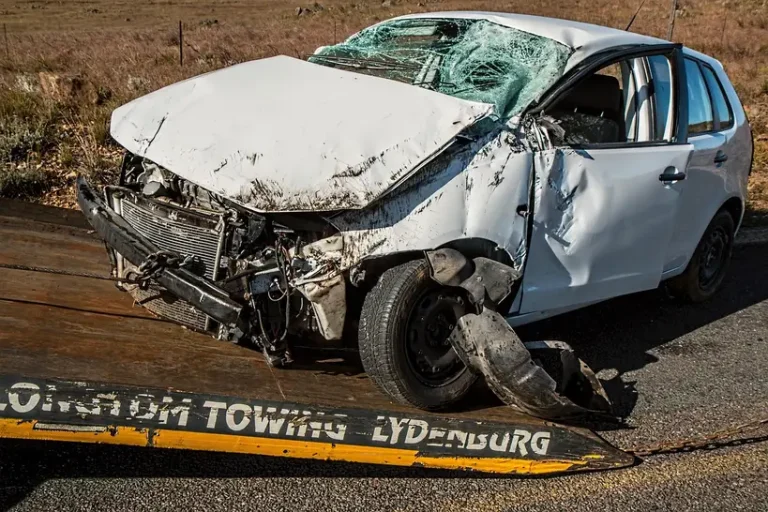
How Do Charities Pick Up a Nonrunning Donated Car?
Charities usually pick up a nonrunning donated car by collecting the vehicle details, checking the title, and assigning a contracted tow operator. If the paperwork is incomplete or the car cannot be reached, pickup can be delayed or refused. This guide explains the pickup workflow, common blockers, and how to prepare the car safely.
What charities need to schedule pickup
A charity donation program usually needs the vehicle’s basic details, proof of ownership, and a reachable pickup location before it assigns a tow. The scheduler may also ask about keys, tire condition, and whether the car can roll or steer. Clear answers help avoid a failed arrival.
Vehicle details the scheduler asks
The intake call or online form usually asks for the VIN, year, make, model, body style, mileage estimate, and current condition. It also asks where the car sits, who can release it, and whether the pickup point is a home, workplace, garage, or storage lot.
Title, lien, and ownership checks
Most programs need a title that matches the donor or the legal owner on record. If a lender still holds a lien, the charity may not schedule pickup until the lien is released or the title rules in that state allow a transfer with a lien release. Missing-title exceptions vary by state and by program.
How pickup windows and confirmation work
After intake, the charity or its vendor usually gives a pickup window rather than an exact minute. The tow company often calls the donor before dispatch to confirm access, parking, and key availability. If the driver cannot reach the car or the paperwork is incomplete, the pickup can move to another day.
- Submit the vehicle details. Give the scheduler the VIN, location, and condition so the program can check whether it will accept the car. Include whether the engine starts, whether the tires hold air, and whether the car is parked in a tight space.
- Confirm ownership documents. Have the title ready, and disclose any lien, missing title, or state-specific transfer issue before the tow is booked. That lets the charity tell you whether pickup can proceed or whether paperwork must be fixed first.
- Choose the pickup window. Pick a time when someone can answer the phone and release the car. If the car sits behind a locked gate, in a garage, or at a storage lot, the scheduler needs that access detail up front.
- Wait for confirmation. The tow vendor normally confirms the visit by phone or text before arrival. Keep that contact number active so the driver can verify the address and avoid a wasted trip.
Will they tow a car that does not run?
Many charity vehicle programs accept a nonrunning car if the title is clear and the pickup site is accessible. A dead battery, bad starter, or failed engine often does not block donation by itself. The real question is whether the tow truck can load the vehicle safely.
Nonrunning, inoperable, and damaged vehicles
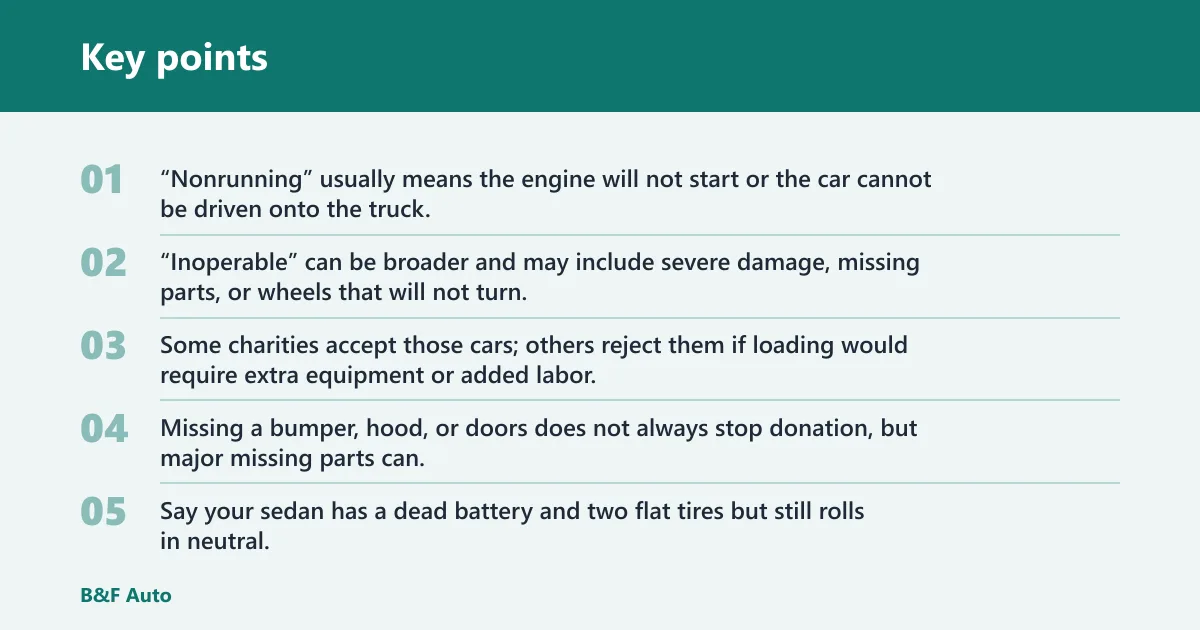
“Nonrunning” usually means the engine will not start or the car cannot be driven onto the truck. “Inoperable” can be broader and may include severe damage, missing parts, or wheels that will not turn. Some charities accept those cars; others reject them if loading would require extra equipment or added labor.
Flat tires, dead batteries, and locked wheels
Flat tires and a dead battery are common problems, and many tow vendors can still load the car with a winch if it rolls and steers enough to reach the truck. Locked wheels, seized brakes, or a stuck transmission can stop pickup if the driver cannot move the car without special equipment.
When missing parts can block acceptance
Missing a bumper, hood, or doors does not always stop donation, but major missing parts can. If a car has no wheels, a broken frame, or damage that makes secure attachment impossible, the charity may decline it or require a different recovery setup. That decision usually comes before pickup day.
Say your sedan has a dead battery and two flat tires but still rolls in neutral. A tow operator can often winch it onto a flatbed if the driveway is level and the title is ready. If the front wheels are locked, the same car may need a different tow setup or may be refused.
Nonrunning car pickup checklist
This checklist shows who does what during a typical charity pickup. The donor prepares the car and paperwork. The charity confirms acceptance and assigns the tow. The tow company handles the loading and transport. Actual timing depends on location, title status, and truck availability.
| Donor action | Charity or tow-company action | Required document | Common failure point | Estimated time window from request to pickup |
|---|---|---|---|---|
| Submit vehicle details and contact information | Review acceptance and open the file | VIN and donor contact info | Wrong VIN, incomplete address, no answer at callback | Same day to 2 days |
| Confirm title status and lien status | Check transfer rules and approve or flag the file | Vehicle title, lien release if needed | Missing title, old lien, name mismatch | 1 to 3 days |
| Remove personal items and locate keys | Schedule a tow vendor and assign a pickup window | Spare key if the main key is missing | No keys, car blocked in, unsafe access | 2 to 7 days |
| Be available for the pickup call or release the car with instructions | Confirm the arrival time and dispatch the truck | Photo ID may be requested by the driver or charity | Donor unavailable, wrong location, gate locked | Same day to 10 days |
| Sign title or transfer form at pickup or shortly after | Load the car, issue receipt, and process transfer | Signed title or state form | Unsigned paperwork, lien issue, unreadable mileage | Pickup day to 3 days after |
How the tow truck collects the car
A nonrunning donation is usually collected by a tow truck or flatbed, not by a driver who expects to start the engine. The operator checks access, connects the winch or loading equipment, and then secures the car for transport. The car’s location and movement condition matter more than the engine itself.
Winching or flatbed loading
If the vehicle rolls, the tow operator may use a winch to pull it onto the flatbed or lift bed. If the car cannot roll, the driver may need extra skates, dollies, or another method approved by the company. The operator must secure the car before leaving the site.
Driveway, street, garage, or lot access
A driveway usually gives the easiest access. A street pickup can work if local parking rules allow it and the tow truck can position safely. A garage or storage lot may need a cleared path, open gate, and enough ceiling height for the truck bed or boom to operate.
Safety checks for keys, brake, and space
The driver may ask for the key so the steering wheel can unlock and the transmission can be shifted if needed. A set parking brake can help secure the car before loading, but a stuck brake can also block movement. The truck needs enough room to line up, winch, and exit without backing into obstacles.
- Clear the pickup path. Move trash cans, boxes, snow, or other obstacles away from the car and the approach lane. The tow truck needs a straight working path, especially if the car sits in a narrow driveway or behind parked vehicles.
- Make the car reachable. Unlock gates, open garage doors, and tell the driver about low branches, steep grades, or tight turns. If the car is boxed in by other vehicles, move those first or reschedule.
- Hand over the needed keys. Give the main key or a spare key if the vehicle cannot be unlocked otherwise. If there is no key, tell the tow company before arrival so it can decide whether pickup is still possible.
- Sign the transfer paperwork. Complete any title assignment or charity form the driver or charity provides. That step protects ownership transfer and helps the donation record match the pickup date.
Picture a hatchback parked in a garage with a dead battery and no spare key. The tow company may still pick it up if the garage door opens fully and the car can be rolled out or winched without damage. If the door clearance is too low for the truck setup, pickup usually needs to be moved or canceled.
What can stop pickup?
Pickup can fail for paperwork problems, blocked access, or a car condition that makes loading unsafe. Missing title, an unresolved lien, a locked gate, or a vehicle trapped behind other cars are all common reasons a charity or tow vendor will refuse the appointment.
Missing title or unclear ownership
A charity generally needs proof that the donor has the legal right to give the car away. If the title is missing, the name on the title does not match the donor, or a lien is still active, the program may stop the pickup until the issue is solved. State rules on lost titles vary.
No access for the tow truck
If the truck cannot reach the vehicle safely, pickup may be delayed or refused. That includes a locked gate, narrow alley, buried car in a garage, car behind a fence, or a location where the truck cannot turn around. Space matters because loading equipment needs a straight setup.
Rescheduling after a failed arrival
If the driver arrives and cannot load the car, the charity usually reschedules after the problem is fixed. That may mean clearing the driveway, finding the key, removing a blocking vehicle, or completing title paperwork. Some programs will close the request if the issue is not resolved quickly.
What happens after pickup
After pickup, the tow company transports the car and the charity handles the donation record. The donor should keep the receipt, confirm the title transfer is complete, and save any acknowledgment needed for tax filing. Insurance and registration should be canceled only after the transfer is no longer in the donor’s name.
Title transfer and receipt handling
The title is usually signed over at pickup or sent shortly after, depending on the program and state rules. The charity should issue a written acknowledgment showing the donation date and identifying the charity. Keep that document with the title copy or any release papers.
Tax acknowledgment basics
For tax purposes, the donor generally needs the charity’s name, the date of donation, and an acknowledgment of the car transfer. If the car is sold for more than a nominal amount, the IRS rules can affect the deduction amount, so the donor should use the charity’s written statement and the vehicle’s fair market value guidance rather than guess.
Insurance and registration follow-up
Do not cancel insurance until the transfer date is confirmed and the car is no longer in your name. Registration cancelation rules vary by state, and some states require a plate return or a notice of transfer. The charity’s receipt helps prove the date the car left your control.
What to remove before pickup
Remove personal property, toll tags, garage door openers, and documents from the car before the tow arrives. Keep the title, keys, and any needed transfer form ready for the driver or charity contact. A clean interior also helps prevent confusion about what was included in the donation.
- Take out all personal items. Check the glove box, console, trunk, seat pockets, and under the seats. Once the car is loaded, retrieving a forgotten item can be difficult or impossible.
- Remove toll and parking devices. Take off toll transponders, passes, and parking permits so charges do not continue after pickup. Also remove any garage opener or house key stored in the vehicle.
- Gather paperwork and keys. Keep the title, registration if requested, and a spare key together. If the main key is missing, tell the scheduler before the truck arrives so the driver is not surprised.
- Plan your insurance timing. Wait until the donation transfer is confirmed before canceling the policy. That reduces the chance of a coverage gap if the pickup is delayed by paperwork or access problems.
Frequently asked questions
How do charities pick up a nonrunning donated car?
The charity or its contractor schedules a pickup after intake, confirms ownership and access, and sends a tow truck or flatbed. The driver loads the vehicle with a winch or by rolling it onto the bed, then transports it and completes the donation transfer paperwork.
Do charities tow nonrunning cars for free?
Many donation programs arrange free towing, but it depends on the charity and the local vendor agreement. Some programs cover standard towing only, while unusual recoveries, remote locations, or hard-to-access vehicles may change the arrangement. Always confirm the fee policy before you schedule.
What information do charities need to schedule a pickup?
Most programs ask for the VIN, year, make, model, location, and a short description of condition. They also need contact information, title status, and details that affect access, such as a garage, gated lot, flat tires, or no keys.
Can a charity pick up a car that does not run at my home?
Yes, if the home pickup location is accessible and the title is clear. The tow truck still needs room to load the car, and the donor may need to open gates, unlock the vehicle, or move other cars. A driveway is usually easier than a cramped street.
How long does it take for a charity to pick up a donated car?
Pickup timing can vary from same day to about a week or more, depending on the charity, the tow schedule, and whether the paperwork is ready. Missing title, unclear ownership, or poor access can add time. A confirmed window is usually given after intake.
What happens after a charity picks up a nonrunning donated car?
The tow company delivers the car, the charity processes the transfer, and the donor receives a written acknowledgment for tax records. The donor should keep that receipt, confirm the title is transferred, and then handle insurance and registration changes according to state rules.